

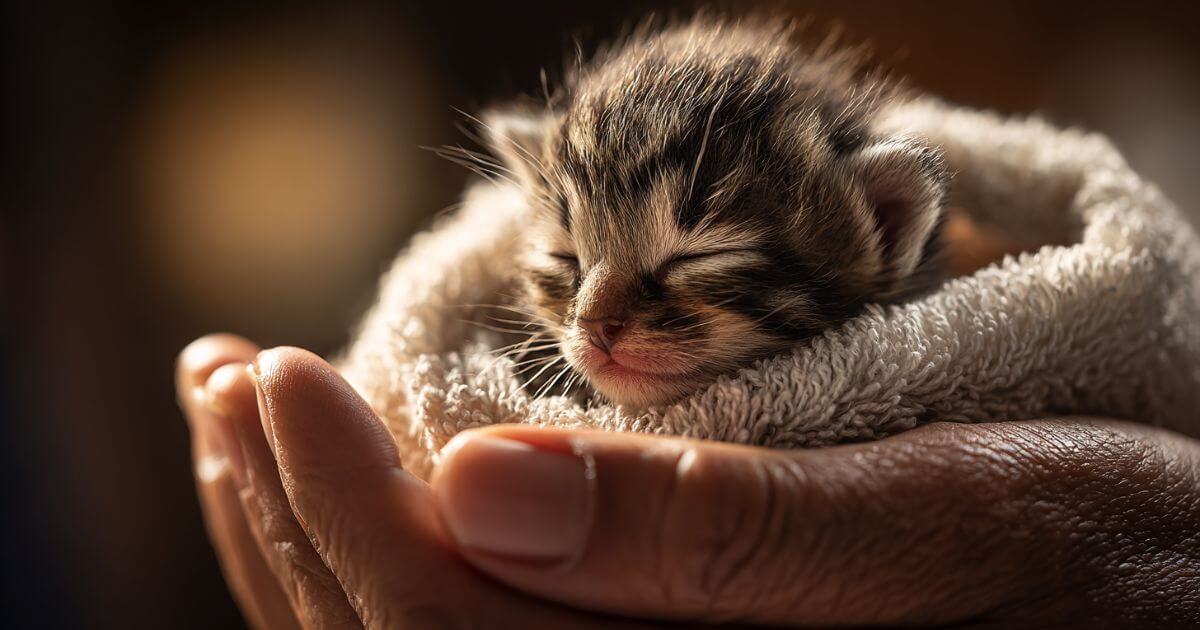
Fading kitten syndrome (FKS) is a life-threatening emergency where an apparently healthy newborn kitten suddenly becomes weak, stops nursing, and begins to decline. Without immediate intervention, fading kittens can die within hours. This guide covers the warning signs, causes, and emergency treatment protocols that can help save a fading kitten’s life.
- Fading kitten syndrome is a medical emergency—act within minutes, not hours
- The three immediate threats: hypothermia, hypoglycemia, and dehydration
- Over 50% of kitten deaths occur in the first 2 weeks of life
- Daily weighing is critical—healthy kittens should gain 10-15 grams per day
- Warming the kitten is the FIRST priority before attempting to feed
Emergency Warning: If you have a kitten that is cold, limp, or unresponsive, skip to the Emergency Treatment Protocol section immediately. Time is critical.
What Is Fading Kitten Syndrome?
Fading kitten syndrome is not a single disease but a collection of symptoms seen when a newborn kitten fails to thrive. According to International Cat Care, “faders” are typically kittens that die during the first two weeks of life after being born apparently healthy.
The syndrome occurs because newborn kittens are extremely fragile. They cannot regulate their body temperature, have no energy reserves, and their immune systems are immature. What might be a minor issue in an adult cat can trigger a rapid, fatal decline in a neonate.
Why Newborn Kittens Are So Vulnerable
- No temperature regulation: Kittens are poikilothermic (body temperature varies with environment) for the first week of life
- No energy reserves: Newborns have high energy demands but cannot store glycogen effectively
- Immature immune system: Dependent entirely on antibodies from mother’s colostrum
- High fluid requirements: Need 130-220 mL/kg/day compared to just 50-65 mL/kg/day for adults
- Rapid decline: Small problems quickly cascade—diarrhea leads to dehydration, which causes hypothermia, which leads to death
Warning Signs: How to Recognize a Fading Kitten
Early detection is critical. According to PetMD, the four key signs of fading kitten syndrome are: low body temperature, lethargy and weakness, abnormal vocalizing, and difficulty breathing.
Early Warning Signs
- Lethargy—little to no energy, not moving normally
- Sleeping separately from the litter
- No interest in nursing or weak sucking reflex
- Constant crying (or complete silence when a kitten was previously vocal)
- Weight loss or failure to gain weight
- Cool to the touch, especially ears and paw pads
- Pale or blue-tinged gums
Physical Signs to Check
| What to Check | Healthy Kitten | Fading Kitten |
|---|---|---|
| Body Temperature | Week 1: 95-99°F (35-37°C) Week 2-3: 97-100°F (36-38°C) |
Below 94°F (34°C) = emergency |
| Activity Level | Responsive, moves toward warmth | Limp, unresponsive, motionless |
| Skin Elasticity | Skin snaps back immediately when pinched | Skin “tents” and slowly returns (dehydrated) |
| Gum Color | Pink and moist | Pale, white, gray, or blue |
| Nursing | Strong sucking reflex, nurses vigorously | Weak or absent suck, refuses to latch |
| Vocalization | Normal kitten sounds when hungry | Constant weak crying OR complete silence |
The “Triangular Face” Sign: A fading kitten’s face often appears gaunt and triangular as dehydration progresses. If you notice this change in facial appearance, the kitten needs immediate intervention.
Causes of Fading Kitten Syndrome
According to research published in the Journal of Feline Medicine and Surgery, fading has many potential causes including infectious, toxic, traumatic, metabolic, and genetic diseases. Understanding the underlying cause helps with prevention in future litters.
The “Big Three” Immediate Threats
Newborn kittens cannot regulate body temperature and rely on their mother for warmth. A cold kitten cannot digest food properly, has decreased heart and breathing rates, and will eventually suffer cardiovascular failure.
Kittens have high energy needs but no glycogen reserves. Any kitten that is sick, stressed, or not nursing adequately will rapidly develop dangerously low blood sugar, leading to weakness, seizures, coma, and death.
Neonatal kittens have higher water content and greater fluid losses than adults. Without adequate milk intake, or with fluid loss from diarrhea, dehydration occurs rapidly and leads to organ failure.
Underlying Medical Causes
| Category | Specific Causes |
|---|---|
| Birth-Related | Difficult birth (dystocia), trauma during delivery, oxygen deprivation, low birth weight (under 75g) |
| Congenital Defects | Heart abnormalities, cleft palate, megaesophagus, kidney defects (accounts for 10-20% of deaths) |
| Infections | Bacterial infections, feline panleukopenia, herpesvirus, parasites (fleas, hookworms) |
| Maternal Issues | Rejection, insufficient milk, mastitis, lack of maternal antibodies |
| Blood Type Incompatibility | Neonatal isoerythrolysis (see section below) |
| Environmental | Extreme temperatures, poor hygiene, overcrowding, over-handling |
Neonatal Isoerythrolysis (Blood Type Incompatibility)
Neonatal isoerythrolysis (NI) occurs when a blood type B queen nurses blood type A or AB kittens. The queen’s anti-A antibodies enter the kitten’s bloodstream through colostrum and destroy the kitten’s red blood cells.
High-Risk Breeds for NI: British Shorthair (28.6% type B), Devon Rex, Cornish Rex, Somali (23.8%), Birman, Persian, Abyssinian, and Turkish Angora have higher frequencies of blood type B. Always blood type breeding cats in these breeds.
Signs of NI include:
- Healthy birth followed by rapid decline within 1-3 days
- Red-brown urine (hemoglobinuria)
- Jaundice (yellowing of skin and gums)
- Severe anemia
- Tail tip or ear tip necrosis (tissue death) in mild cases
Prevention: Blood type all breeding cats. Never breed a type B queen to a type A tom. If an at-risk mating occurs, remove kittens from the queen for the first 24 hours and hand-feed or foster to a type A queen.
Emergency Treatment Protocol
When you find a fading kitten, you must address hypothermia and hypoglycemia immediately. According to rescue protocols from Austin Pets Alive and Jacksonville Humane Society, follow these steps in order:
Critical Rule: NEVER feed a cold kitten. A hypothermic kitten cannot digest milk. Warming must come FIRST or feeding can be fatal.
Step 1: Warm the Kitten Immediately
- Wrap the kitten in a towel “burrito” style—entire body covered, only nose and mouth exposed
- Place wrapped kitten on a heating pad set to LOW (never directly on pad—wrap pad in towel)
- Alternative: Fill a sock with uncooked rice, microwave 2-3 minutes, wrap in cloth
- Alternative: Use your body heat—place kitten against your bare skin under your shirt
- Target temperature: Gradually warm to 99-100°F (37-38°C) over 20-30 minutes
- Do NOT use hot water—rapid temperature changes can cause shock
Step 2: Raise Blood Sugar
While warming, address hypoglycemia:
- Best option: Karo syrup (corn syrup) or maple syrup
- Alternative: Sugar water (equal parts sugar and warm water, dissolved)
- Application: Rub a small amount on gums and tongue every 3 minutes
- If kitten won’t swallow: Just rub on gums—it will absorb
- Expected response: Improvement within 20 minutes if hypoglycemia is the cause
Go Slow: If syringe-feeding any liquid, give tiny drops slowly to prevent aspiration (liquid entering the lungs). If the kitten is not swallowing, do not force liquid—rub on gums only.
Step 3: Address Dehydration
Once the kitten is warm and more responsive:
- Mild dehydration: Offer warm kitten milk replacer (KMR) by bottle
- Moderate dehydration: Mix 50:50 warm KMR and unflavored Pedialyte
- Severe dehydration: Requires subcutaneous fluids from a veterinarian
Step 4: Contact Your Veterinarian
While providing emergency care, contact your vet immediately. Fading kitten syndrome often has underlying causes that require veterinary treatment such as antibiotics for infection or supportive care.
What to Expect
- If the kitten responds to warming and sugar within 20-30 minutes, continue supportive care
- If no improvement within 1 hour, the prognosis is often poor
- Even with successful initial stabilization, the underlying cause must be addressed
Daily Monitoring: Catching Problems Early
The best way to save fading kittens is to catch problems before they become emergencies. According to Kitten Lady and veterinary guidelines, daily weighing is the most important monitoring tool.
Healthy Weight Gain Guidelines
| Age | Expected Weight | Daily Gain |
|---|---|---|
| Birth | 90-110 grams (3-4 oz) | — |
| Day 1-3 | May lose slightly | Small loss normal |
| Day 4+ | Steady increase | 10-15 grams/day minimum |
| 1 Week | 150-200 grams | — |
| 2 Weeks | 170-230 grams (double birth weight) | — |
| 4 Weeks | 350-450 grams | 70-100 grams/week |
The 7-Gram Rule: If a kitten gains less than 7 grams per day for more than one day, or shows any weight loss after day 3, intervene immediately. This early warning can save lives.
Daily Monitoring Checklist
- Weigh each kitten at the same time daily (use a kitchen scale in grams)
- Check that each kitten is nursing—watch for competition at nipples
- Monitor stool—diarrhea requires immediate attention
- Check hydration by gently pinching skin
- Observe activity level and responsiveness
- Feel body temperature—ears and paw pads should be warm
- Watch the mother for signs of mastitis or rejection
Prevention: Reducing Fading Kitten Risk
While not all causes of fading kitten syndrome can be prevented, proper breeding practices significantly reduce risk.
Before Breeding
- Health test breeding cats: Screen for genetic diseases, FeLV, FIV
- Blood type both parents: Especially in high-risk breeds
- Vaccinate the queen: Ensure vaccinations are current before breeding
- Deworm and treat for parasites: Before breeding and during pregnancy
- Ensure queen is healthy weight: Neither obese nor underweight
Environment Setup
- Temperature: 85-90°F (29-32°C) for first week, gradually decreasing
- Humidity: 55-60%
- Quiet location away from household traffic
- Clean bedding changed daily
- Draft-free but well-ventilated
- Limit handling by strangers in the first 2 weeks
Critical First 24 Hours
The first 24 hours are the most important period for newborn kittens:
- Colostrum intake: Kittens must nurse within 2 hours of birth to receive maternal antibodies
- Warmth: Ensure all kittens stay with mother or supplemental heat is provided
- Monitoring: Check that every kitten has nursed successfully
- Veterinary check: Have kittens examined at 2 days old to identify problems early
Supplies to Have on Hand
- Digital kitchen scale (measures in grams)
- Heating pad (with low setting) or Snuggle Safe disc
- Karo syrup or maple syrup
- Kitten milk replacer (KMR)
- Unflavored Pedialyte
- Small syringes (1-3 mL) for feeding
- Kitten nursing bottles with slow-flow nipples
- Clean towels and blankets
- Digital thermometer
- Nutri-Cal or similar high-calorie supplement
- Veterinarian’s emergency contact number
When to Call the Veterinarian
Call Your Vet Immediately If:
- Kitten is cold, limp, or unresponsive
- No improvement after 1 hour of emergency care
- Kitten has diarrhea (can cause rapid dehydration)
- Red-brown urine (possible NI)
- Weight loss for more than one day
- Kitten refuses to nurse for more than 4 hours
- Visible birth defects (cleft palate, limb abnormalities)
- Mother showing signs of illness or rejecting kittens
Frequently Asked Questions
Unfortunately, the survival rate for fading kitten syndrome is generally low. However, if the underlying cause is identified and treated promptly, some kittens do survive with intensive care. The key factors for survival are early detection and immediate intervention—kittens treated within minutes have better outcomes than those where treatment is delayed by hours.
Newborn kittens can die suddenly due to congenital defects, birth trauma, hypothermia, hypoglycemia, infections, failure to receive colostrum, or blood type incompatibility (neonatal isoerythrolysis). Because neonatal kittens have no reserves and immature organ systems, minor problems can cascade into fatal emergencies within hours. Over 50% of kitten deaths occur in the first two weeks of life.
You can provide critical first aid at home: warm the kitten gradually, rub sugar syrup on gums to raise blood sugar, and provide hydration once warm. However, fading kitten syndrome is a medical emergency that usually requires veterinary care to address underlying causes. Home care buys time while you get to the vet—it is not a substitute for professional treatment.
Warning signs include: body temperature below 94°F (34°C), lethargy or complete unresponsiveness, weak or absent sucking reflex, constant weak crying or complete silence, weight loss, dehydration (skin doesn’t snap back when pinched), pale or blue gums, difficulty breathing, and sleeping away from littermates. If you observe any of these signs, begin emergency warming and contact your veterinarian immediately.
Healthy kittens should gain 10-15 grams per day minimum, starting from day 2-3 of life. They should double their birth weight by 1-2 weeks of age. A kitten gaining less than 7 grams per day for more than one day, or showing any weight loss after day 3, needs immediate intervention. Daily weighing with a gram scale is the most important monitoring tool.
Kittens may be born weak due to: low birth weight (under 75 grams), difficult labor causing oxygen deprivation, congenital abnormalities, infections passed from the mother, inadequate maternal nutrition during pregnancy, or genetic factors. Kittens born weak have significantly higher mortality rates and require careful monitoring and often supplemental feeding.
Connect with Experienced Breeders
PairMyPet connects responsible breeders who can share knowledge about kitten care, health testing, and breeding best practices.
Join the CommunityFinal Thoughts
Fading kitten syndrome is one of the most heartbreaking experiences for breeders and rescuers. While not every kitten can be saved, understanding the warning signs and having emergency supplies ready gives you the best chance of helping a fading kitten survive.
Remember: prevention is key. Proper health testing before breeding, maintaining optimal environmental conditions, ensuring colostrum intake in the first hours of life, and daily weight monitoring can prevent many cases of fading kitten syndrome before they start. For comprehensive guidance on breeding preparation and birth, see our cat breeding 101 guide. If you’re new to breeding, our guide on how to become a cat breeder covers everything from cattery setup to finding a mentor.
If you lose a kitten despite your best efforts, know that you did everything possible. Sometimes underlying causes like congenital defects or severe infections cannot be overcome, no matter how quickly or expertly you intervene.
This article was researched using information from PetMD, Journal of Feline Medicine and Surgery (PMC), Kitten Lady, and Veterinary Medicine International.