
Find a Stud Dog Near You
The Trusted Stud Dog Finder — Browse by Breed and Location
Browse verified stud dogs by breed and location. Health-tested sires, responsible owners, direct messaging.
Featured Stud Dogs
Health-tested stud dogs from responsible owners, ready to connect.



Browse Stud Dogs by Breed
Find breed-specific stud dog profiles, health testing requirements, stud fee ranges, and breeding guidance for the most popular breeds.
French Bulldog Stud Dogs
The most popular breed in the world, with breed-specific considerations around brachycephalic health, C-section delivery, and colour genetics.
→German Shepherd Stud Dogs
Working and show line studs with DM, hip, and elbow screening requirements per the German Shepherd Dog Club of America.
→Golden Retriever Stud Dogs
Sporting breed studs requiring four core GRCA health clearances covering hips, elbows, heart, and eyes.
→Labrador Retriever Stud Dogs
America’s most registered breed, with seven CHIC-recommended health screenings including EIC and prcd-PRA.
→Siberian Husky Stud Dogs
Working breed studs with unique eye colour genetics, seasonal breeding cycles, and ophthalmologist screening requirements.
→Australian Shepherd Stud Dogs
Herding breed studs where MDR1 drug sensitivity testing and merle-to-merle pairing safety are critical.
→Goldendoodle Stud Dogs
Designer breed studs spanning F1 through Multigen, requiring dual parent breed health panels from both GRCA and PCA.
→Pomeranian Stud Dogs
Toy breed studs with Alopecia X screening, small-breed whelping considerations, and throwback vs standard type evaluation.
→Shih Tzu Stud Dogs
Toy breed studs requiring brachycephalic airway assessment, eye screening, and careful size-matching for safe delivery.
→Browse Stud Dogs by Location
Find stud dogs near you. Browse by state, province, or region to connect with local stud owners.
Working with a local stud simplifies logistics. You can meet the dog in person, evaluate temperament firsthand, and coordinate natural breeding schedules without the cost and complexity of shipping semen. That said, the right health match matters more than proximity. If no local stud meets your standards, artificial insemination with chilled or frozen semen from a distant stud is a viable alternative.
What Makes a Good Stud Dog?
A good stud dog passes breed-specific health clearances, demonstrates stable temperament, conforms to the breed standard, contributes genetic diversity, and comes with clear breeding terms agreed upon before mating.
Choosing a stud based on looks alone is one of the most common mistakes new breeders make. A dog can be stunning in the ring and still carry genetic conditions that surface in the litter. The AKC recommends evaluating studs across multiple dimensions, not just appearance.
5-Point Stud Evaluation
What responsible breeders check before committing
Health clearances are the foundation. Every breed has a recommended panel through the OFA CHIC program. At minimum, ask for hip evaluations, eye exams, and cardiac screening. Breed-specific tests vary: Golden Retrievers need elbow clearances, French Bulldogs need spine and patella evaluations, Australian Shepherds need MDR1 and HSF4 testing. Check our breed pages above for the exact requirements.
Temperament is hereditary. A stud with anxiety, aggression, or fear reactivity can pass those traits to offspring. Ask to meet the dog, or request video of the dog in different environments. References from previous breeding partners are valuable.
Conformation should complement your female. If she’s slightly long in the back, look for a stud with excellent topline. The goal is improving the next generation, not doubling down on the same faults.
Genetic diversity protects the litter. A Coefficient of Inbreeding (COI) above 6.25% increases the risk of autoimmune disorders, reduced fertility, and shorter lifespan. Tools like Embark’s breed-specific testing can calculate COI from DNA.
Breeding terms should be documented in a written contract before any mating. This covers the stud fee, what happens if the female doesn’t conceive, how many puppies the stud owner receives (if applicable), and who registers the litter. Read our stud services guide for a breakdown of standard contract terms.
Health Testing Before Breeding
Health testing is not optional. It is the single most important step in responsible breeding, and it protects both the stud and the resulting litter from preventable genetic conditions.
The Orthopedic Foundation for Animals (OFA) maintains the largest public database of canine health clearances. The CHIC program sets breed-specific testing requirements: pass all required tests, and the dog earns a CHIC number that any breeder can verify.
Which Tests Apply to Your Breed?
Testing requirements vary by breed group. Here is a general overview. For breed-specific details, visit the individual breed pages linked above.
Common Health Tests by Breed Group
Required screenings vary by breed type
| Test | Sporting | Working | Herding | Toy | Brachy. |
|---|---|---|---|---|---|
| Hip Evaluation (OFA/PennHIP) | ✓ | ✓ | ✓ | Some | ✓ |
| Elbow Evaluation | ✓ | ✓ | ✓ | Rare | Some |
| Cardiac Exam | ✓ | ✓ | Some | ✓ | ✓ |
| Ophthalmologist Eye Exam | ✓ | ✓ | ✓ | ✓ | ✓ |
| Patella Evaluation | Rare | Rare | Some | ✓ | ✓ |
| BOAS Assessment | N/A | N/A | N/A | N/A | ✓ |
| Breed-Specific DNA Panel | Varies | Varies | Varies | Varies | Varies |
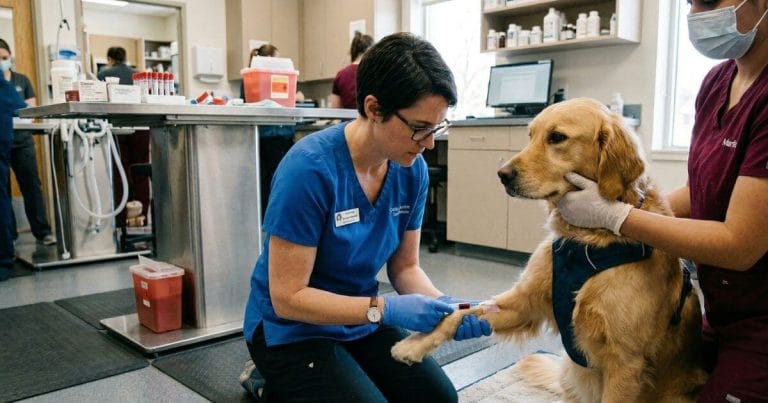
Beyond the CHIC panel, the AKC recommends brucellosis testing for every dog before breeding. Brucellosis is a bacterial infection that causes infertility, late-term abortion, and stillbirth. It spreads through breeding and is difficult to treat once contracted. A simple blood test rules it out.
When reviewing stud profiles on PairMyPet, message the owner directly to ask about health clearances. Responsible owners are happy to share OFA numbers, CHIC certificates, and DNA test results during the conversation. Learn more in our health testing before breeding guide.
Stud Fees: What to Expect
Stud fees vary widely based on breed, health clearances, pedigree, titles, and demand. Understanding the typical range helps you budget and identify red flags.
A stud fee typically includes one or two breeding attempts (natural or AI) and may include a return service guarantee if the female does not conceive. It does not usually cover progesterone testing, veterinary costs for the female, or semen shipping.
Red flags on pricing: Studs advertised well below the breed average often lack health clearances or testing. Conversely, extremely high fees for unproven studs with no titles, clearances, or track record should raise questions. The sweet spot is a stud with documented health clearances, breed-appropriate structure, and a clear contract.
For breed-specific fee breakdowns, see our individual breed pages: French Bulldog studs (highest average due to AI requirements), Golden Retriever studs, and Labrador Retriever studs.
Typical Stud Fee Ranges by Category
2025–2026 market data
How PairMyPet Works
PairMyPet connects stud dog owners with breeders looking for the right match. Here is how it works.
Create Your Profile
Add your dog’s photo, breed, age, gender, and a description of what you’re looking for.
Browse Stud Dogs
Search by breed and location to find stud dogs that match your breeding goals.
Review and Compare
Look through profiles, read descriptions, and shortlist your top candidates.
Message Stud Owners
Reach out directly to discuss health clearances, breeding terms, stud fees, and logistics.
The most important conversations happen after you connect. Ask stud owners for OFA numbers, CHIC certificates, DNA test results, and references from previous breedings. Discuss whether natural breeding or artificial insemination is appropriate, and agree on contract terms before scheduling anything.
Not sure where to start? Read our how to find a stud dog guide or our dog breeding for beginners walkthrough.
For Stud Dog Owners
If you own a quality stud dog with health clearances and breed-appropriate structure, PairMyPet helps you reach breeders actively searching for studs like yours.
Setting up your stud profile takes under five minutes. Add your dog’s photo, breed, age, gender, and a description covering health testing, pedigree highlights, and stud fee. Breeders browsing by breed and location will find your profile and can message you directly.
A strong stud profile includes:
- A clear, well-lit photo showing structure and type
- Breed, age, and registration details in the description
- Health clearances mentioned (OFA numbers, CHIC status, DNA panel results)
- Stud fee or “contact for pricing”
- Your breeding terms and availability
Want guidance on getting started? Read our guide on how to stud your dog out.
From Our Blog


Frequently Asked Questions
How do I find a stud dog on PairMyPet?
Browse stud dogs by breed and location using the directory. Review profiles to evaluate breed, age, location, and the owner’s description. When you find a stud that interests you, message the owner directly to ask about health clearances, pedigree, stud fees, and breeding terms.
What health tests should a stud dog have before breeding?
At minimum, a stud dog should have hip evaluations, an ophthalmologist eye exam, and a cardiac screening. Beyond that, every breed has specific requirements through the OFA CHIC program. Brucellosis testing is recommended for every dog before any breeding. Ask the stud owner for copies of all test results.
How much do stud fees typically cost?
Stud fees range from $500 to $5,000+ depending on breed, health clearances, pedigree, titles, and demand. Brachycephalic breeds like French Bulldogs command the highest fees due to mandatory artificial insemination. Fees typically include one to two breeding attempts and may include a return service if the female does not conceive.
Can I search for stud dogs by breed and location?
Yes. PairMyPet lets you browse stud dogs by breed and location. Visit any of the breed pages linked above for breed-specific profiles, or use the location pages to find studs near you.
Is there a fee to list my stud dog?
You can create a stud dog profile on PairMyPet and start receiving messages from interested breeders. Visit list your stud dog to set up your profile.
What should I ask a stud dog owner before breeding?
Ask for: OFA and CHIC health clearance numbers, DNA test results for breed-specific conditions, proof of brucellosis testing, references from previous breeding partners, and a written stud contract covering fees, return breeding rights, and litter registration. Meet the dog in person if possible to evaluate temperament.
What is the difference between natural breeding and artificial insemination?
Natural breeding involves the dogs mating directly, which works well when both dogs are local and experienced. Artificial insemination (AI) uses collected semen, either fresh, chilled, or frozen, and is necessary for some brachycephalic breeds or when the stud is in a different location. AI requires a veterinarian and adds cost, but it expands your options beyond local studs. Learn more in our breeding guide.
How do I know if a stud dog is right for my female?
Evaluate the stud using the 5-Point Evaluation: health clearances, temperament, conformation, genetic diversity, and breeding terms. The stud should complement your female’s strengths and offset her weaknesses. Run a COI calculation to check genetic diversity, and compare pedigrees to avoid doubling up on the same health risks. Our selective breeding guide covers this in detail.
Your Dog Deserves a Great Match
The right stud dog makes the difference between a healthy, well-tempered litter and one that carries preventable problems. PairMyPet connects you with stud owners who take breeding as seriously as you do.