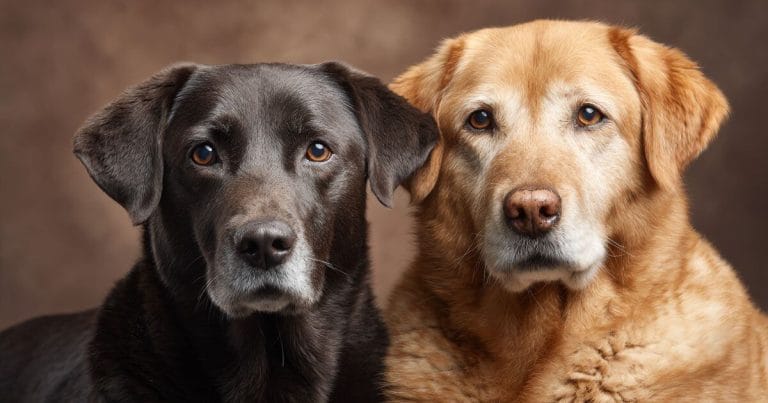
Health testing is the foundation of responsible dog breeding. Before breeding your dog, completing the appropriate health screenings helps reduce the risk of passing genetic diseases to puppies and ensures you’re contributing to the overall health of your breed. This guide covers every test you need to know about, from OFA certifications to genetic DNA testing.
- Dogs must be 24 months old for final OFA hip and elbow certification
- OFA eye exams are valid for only 12 months and require annual recertification
- CHIC certification indicates a breeder has completed all breed-specific health tests
- Brucellosis testing should be done within 30 days of breeding for both dogs
- DNA genetic testing identifies carriers of hereditary diseases—never breed two carriers together
Why Health Testing Matters
Health testing isn’t just a checkbox for responsible breeders—it’s the primary tool for reducing inherited diseases in dogs. The Orthopedic Foundation for Animals (OFA) states that their mission is to “promote the health and welfare of companion animals through a reduction in the incidence of genetic disease.”
When you health test your breeding dogs, you:
- Identify dogs with genetic diseases before breeding
- Make informed decisions about breeding pairs
- Reduce the likelihood of producing affected puppies
- Provide documentation to puppy buyers
- Contribute to breed-wide health improvement
Learn More: Visit our comprehensive Health Testing Guide for detailed information on each test type and breed-specific requirements.
Understanding OFA and CHIC
What Is OFA?
The Orthopedic Foundation for Animals (OFA) is the primary registry for canine health testing in the United States. Founded in 1966, OFA maintains databases for hip dysplasia, elbow dysplasia, cardiac disease, eye disease, thyroid function, and many other conditions.
What Is CHIC Certification?
The Canine Health Information Center (CHIC) is a joint program between OFA and the AKC Canine Health Foundation. CHIC numbers are issued to dogs that have completed all breed-specific health tests required by their parent club.
Important: A CHIC number does not mean all results were normal—only that testing was completed and results made public. Always review the actual test results, not just the CHIC number.
Essential Health Tests for Breeding Dogs
1. Hip Dysplasia Evaluation
Hip dysplasia is one of the most common inherited orthopedic conditions in dogs, particularly in medium and large breeds. The hip evaluation assesses how well the ball of the femur fits into the hip socket.
| Evaluation Method | Minimum Age | What It Measures |
|---|---|---|
| OFA Hip Evaluation | 24 months | Hip joint conformation via extended-leg radiograph |
| PennHIP Evaluation | 16 weeks | Hip joint laxity via distraction index |
OFA Hip Grading System
OFA grades hips into seven categories:
- Excellent, Good, Fair: Within normal limits—suitable for breeding
- Borderline: Requires re-evaluation in 6-8 months
- Mild, Moderate, Severe Dysplasia: Not recommended for breeding
For Female Dogs: OFA recommends taking hip x-rays 3-4 weeks before or after the heat cycle, avoiding pregnancy, and 3-4 weeks after weaning a litter.
2. Elbow Dysplasia Evaluation
Elbow dysplasia encompasses several developmental abnormalities of the elbow joint. Like hip evaluations, elbow x-rays are submitted to OFA for grading by veterinary specialists.
- Minimum age: 24 months for final certification
- Grading: Normal or Dysplastic (Grade I, II, or III)
- Turnaround: Approximately 2-3 weeks from submission
3. Eye Certification (CAER/OFA)
Eye examinations screen for inherited eye diseases that could affect your dog or be passed to offspring. The exam must be performed by a board-certified veterinary ophthalmologist (ACVO Diplomate).
Annual Requirement: OFA eye certifications are valid for only 12 months. Breeding dogs must be recertified annually.
Conditions Evaluated
- Progressive Retinal Atrophy (PRA)
- Cataracts (hereditary)
- Glaucoma
- Corneal dystrophy
- Retinal dysplasia
- Collie Eye Anomaly
What the Exam Includes
The CAER (Companion Animal Eye Registry) exam uses indirect ophthalmoscopy and slit lamp biomicroscopy after pupil dilation. Note that this is a screening exam—it does not include tear production testing, corneal ulcer detection, or intraocular pressure measurement.
4. Cardiac Evaluation
Cardiac screening detects congenital heart defects and other heart conditions that may be inherited. OFA maintains two cardiac databases:
| Database | Examiner | Method |
|---|---|---|
| Basic Cardiac (BCA) | Any licensed veterinarian | Auscultation (listening for murmurs) |
| Advanced Cardiac (ACA) | Board-certified cardiologist only | Echocardiogram required |
Echocardiogram vs. Auscultation: An echocardiogram is the gold standard for diagnosing heart disease. Not all heart conditions produce audible murmurs, so some dogs with heart disease may go undetected with auscultation alone.
Breed-Specific Requirements
Some breeds have additional cardiac testing requirements:
- Boxers and Doberman Pinschers: Holter monitoring required within 90 days of echocardiogram
- Cavalier King Charles Spaniels: Must be examined by a board-certified cardiologist
5. DNA/Genetic Testing
DNA testing identifies whether your dog carries genetic variants linked to hereditary diseases. This is one of the most powerful tools for preventing genetic disease because it can identify carriers—dogs that don’t show symptoms but can pass the disease to offspring.
How Genetic Inheritance Works
Most genetic diseases are autosomal recessive, meaning:
- Clear: No copies of the mutation—will not develop or pass on the disease
- Carrier: One copy of the mutation—healthy but can pass it to 50% of offspring
- Affected/At-Risk: Two copies—will likely develop the condition
Critical Rule: Never breed two carriers together. If both parents carry a recessive mutation, 25% of puppies will be affected.
DNA Testing Providers
| Provider | Health Conditions | Key Features |
|---|---|---|
| Embark for Breeders | 270+ conditions | OFA-accepted results, COI calculation, breeding tools |
| Wisdom Panel | 270+ conditions | Free vet consultation, breeding pair analysis |
| Animal Genetics | Breed-specific panels | Individual test ordering, quick turnaround |
6. Brucellosis Testing
Brucellosis is a bacterial infection (Brucella canis) that causes infertility, spontaneous abortion, and can be transmitted to humans. There is no vaccine and no cure—prevention through testing is essential.
- Before each breeding: Test both dogs within 30 days of mating
- Active stud dogs: Test every 6 months
- Breeding facilities: Test all dogs annually at minimum
- New dogs: Quarantine 8-12 weeks with tests at start and end
Zoonotic Disease: Brucellosis can be transmitted to humans. Dogs testing positive should never be used for breeding and require careful management to prevent human exposure.
Breed-Specific Testing Requirements
Each breed has specific health testing requirements established by their parent club. Here are examples for popular breeds:
Golden Retriever
- Hip Evaluation (OFA or PennHIP)
- Elbow Evaluation
- Cardiac Exam by cardiologist (for Subvalvular Aortic Stenosis)
- Eye Certification (annual)
- NCL DNA Test (Neuronal Ceroid Lipofuscinosis)
- prcd-PRA DNA Test
- Ichthyosis DNA Test
Labrador Retriever
- Hip Evaluation
- Elbow Evaluation
- Eye Certification (annual)
- Exercise-Induced Collapse (EIC) DNA Test
- Centronuclear Myopathy (CNM) DNA Test
- Progressive Retinal Atrophy (prcd-PRA) DNA Test
- D Locus (Dilute) DNA Test
German Shepherd
- Hip Evaluation (OFA or SV a-stamp)
- Elbow Evaluation
- Degenerative Myelopathy (DM) DNA Test
- Temperament Test (recommended)
Find Your Breed’s Requirements: Visit the AKC Breed Health Testing Requirements page or contact your breed’s parent club for complete testing protocols.
Health Testing Costs
Health testing requires financial investment, but costs vary significantly by location and provider. Here’s a general breakdown:
| Test Type | Typical Cost Range | Notes |
|---|---|---|
| OFA Hip X-rays | $150-$500 | Includes sedation; specialist may cost more |
| OFA Elbow X-rays | $100-$250 | Often done with hip x-rays |
| OFA Eye Exam (CAER) | $50-$85 | Must be by ACVO ophthalmologist; annual |
| Cardiac Auscultation | $50-$150 | Basic exam by general vet |
| Cardiac Echocardiogram | $300-$500 | By board-certified cardiologist |
| DNA Health Panel | $100-$250 | Embark, Wisdom Panel, or breed-specific |
| Brucellosis Test | $30-$75 | Simple blood test |
| OFA Registration Fee | $15-$35 per test | Required to list results in database |
Total estimated cost for comprehensive testing: $500-$1,500+ depending on breed requirements and location.
When to Complete Health Testing
Genetic testing can be done at any age—even on puppies. Get this done early to know your dog’s genetic status.
Dogs must be at least 12 months old for OFA cardiac certification.
Can be done at any age but must be renewed annually. Most breeders start at 12 months.
Final OFA certification requires dogs to be 24 months old. Preliminary evaluations can be done earlier but are not official.
Test within 30 days of breeding. Both the male and female should be tested.
How to Verify Health Testing Results
Always verify health testing results before breeding with any dog:
- Search the OFA Database: Visit ofa.org and search by registered name or registration number
- Request Documentation: Ask for copies of official OFA certificates
- Check CHIC Status: Look for a CHIC number as verification of complete testing
- Review DNA Reports: Request access to full genetic testing reports, not just summaries
- Verify Dates: Ensure eye exams are current (within 12 months) and brucellosis tests are recent
Frequently Asked Questions
Required tests vary by breed but typically include: hip evaluation, elbow evaluation, eye certification, cardiac exam, breed-specific DNA/genetic testing, and brucellosis testing before breeding. Check with your breed’s parent club for specific CHIC requirements.
Dogs must be 24 months old for final OFA hip and elbow certification. Cardiac certification requires a minimum age of 12 months. Eye exams can be done at any age. PennHIP evaluations can be performed as early as 16 weeks.
Costs vary by location: Hip x-rays typically cost $150-$500, elbow x-rays $100-$250, eye exams $50-$85, and cardiac exams $50-$500 depending on whether auscultation or echocardiogram. OFA registration fees are $15-$35 per test. Total comprehensive testing often runs $500-$1,500+.
Both evaluate hip health but use different methods. OFA uses extended-leg radiographs to assess joint conformation and can be certified at 24 months. PennHIP measures hip joint laxity using a distraction index and can be performed as early as 16 weeks. Both are accepted for CHIC certification.
OFA eye certifications (CAER exams) are valid for only 12 months from the examination date. Breeding dogs should be recertified annually because some inherited eye conditions develop later in life.
A CHIC (Canine Health Information Center) number means a dog has completed all breed-specific health tests required by their parent club AND the owner has made results public. Important: CHIC numbers are issued regardless of results—a dog with abnormal findings can still receive CHIC certification if results are disclosed.
Find Health-Tested Breeding Partners
PairMyPet connects responsible breeders with health-tested, verified breeding partners. Search by breed, location, and health certifications.
Start Your SearchFinal Thoughts
Health testing is the cornerstone of responsible breeding. While it requires time, money, and patience (waiting until 24 months for OFA certification), the investment protects the puppies you produce and the families who adopt them. Understanding the difference between responsible and backyard breeding helps explain why these tests matter so much. By completing appropriate health testing and making informed breeding decisions, you contribute to the long-term health of your breed. For an in-depth technical resource, see our comprehensive health testing guide.
Remember: health testing isn’t about finding “perfect” dogs—it’s about having the information needed to make responsible breeding decisions and being transparent with puppy buyers about your dogs’ health status. Once your health testing is complete, our dog breeding for beginners guide walks you through the next steps. For guidance on selecting a compatible stud, see our guide to finding a stud dog.
This article was researched using information from the Orthopedic Foundation for Animals (OFA), American Kennel Club, Embark Veterinary, and American College of Veterinary Ophthalmologists.