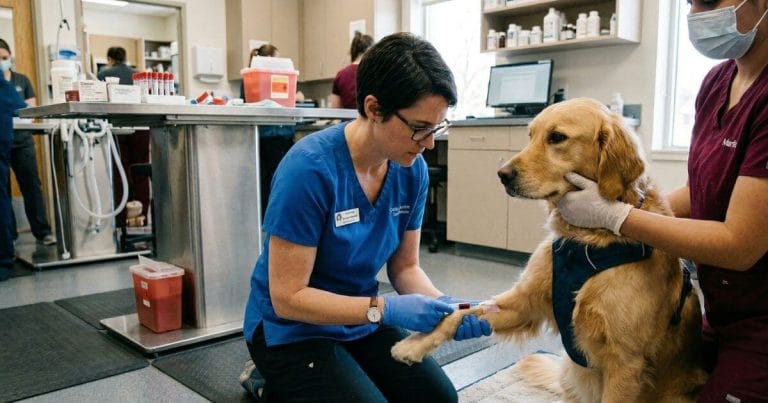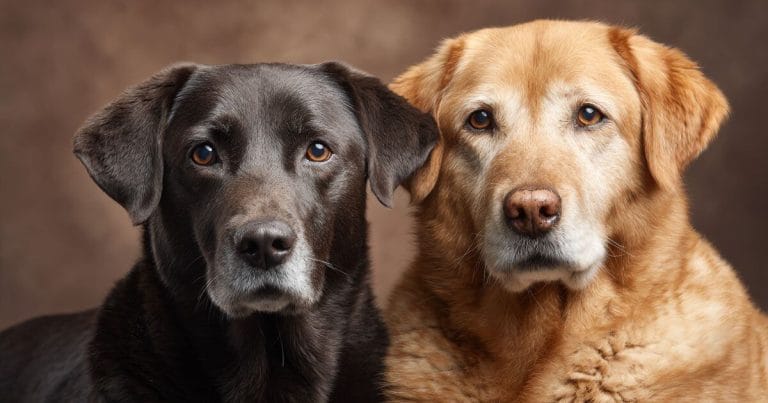
Before breeding your dog, it’s a good idea to complete the appropriate health screenings as it helps to reduce the risk of passing genetic diseases to the next generation. It also ensures you are contributing to improving the overall health of the breed. This guide covers the most common health tests US breeders use, from OFA certifications to genetic DNA testing, with notes on what’s required, what’s optional, and where testing has real limits.
About this guide: The recommendations here focus on US-based testing systems (OFA, CHIC, PennHIP, AKC). Other systems used internationally, such as the FCI, BVA (UK), and SV (Germany), measure and report results differently. Health testing is also breed-specific, so no single checklist applies to every dog. Always verify current protocols with your breed’s official parent club before planning a breeding.
- Dogs must be 24 months old for final OFA hip and elbow certification, because skeletal maturity is required for an accurate official reading
- OFA eye exams are valid for only 12 months because some inherited diseases (such as PRA) appear later in life
- A CHIC number means testing was completed and disclosed, not that every result was normal
- Brucellosis testing should be done within 30 days of breeding for both dogs
- DNA testing helps avoid breeding two carriers of the same recessive mutation, but no panel covers every genetic disease
- Testing requirements differ by breed and change over time, so always cross-check with the parent club
Why Health Testing Matters
Health testing isn’t just a checkbox for responsible breeders. It’s the primary tool for reducing inherited diseases in dogs. The Orthopedic Foundation for Animals (OFA) states its mission is to “promote the health and welfare of companion animals through a reduction in the incidence of genetic disease.”
By health testing breeding dogs you:
- Identify dogs with genetic diseases before breeding
- Make informed decisions about breeding pairs
- Reduce the likelihood of producing affected puppies
- Provide documentation to puppy buyers
- Contribute to breed-wide health improvement
Learn More: Visit our comprehensive Health Testing Guide for detailed information on each test type and breed-specific requirements.
Understanding OFA and CHIC
What Is OFA?
The Orthopedic Foundation for Animals (OFA) is the primary registry for canine health testing in the United States. Founded in 1966, OFA maintains databases for hip dysplasia, elbow dysplasia, cardiac disease, eye disease, thyroid function, and many other conditions.
What Is CHIC Certification?
The Canine Health Information Center (CHIC) is a joint program between OFA and the AKC Canine Health Foundation. CHIC numbers are issued to dogs that have completed all breed-specific health tests required by their parent club, with results published openly in the OFA database.
Important: A CHIC number does not mean a dog passed every test. It only means the breed-required tests were completed and the results made public. Dogs with abnormal findings can and do still receive CHIC numbers when their results are disclosed. Always review the actual test results, grades, and scores, not just the CHIC number.
Essential Health Tests for Breeding Dogs
1. Hip Dysplasia Evaluation
Hip dysplasia is one of the most common inherited orthopedic conditions in dogs, particularly in medium and large breeds. The hip evaluation assesses how well the ball of the femur fits into the hip socket.
| Evaluation Method | Minimum Age | What It Measures |
|---|---|---|
| OFA Hip Evaluation | 24 months | Hip joint conformation via extended-leg radiograph |
| PennHIP Evaluation | 16 weeks | Hip joint laxity via distraction index |
Why Most US Breeders Use OFA Over PennHIP
Although PennHIP can be performed as early as 16 weeks and provides quantitative laxity scoring, OFA remains the more commonly required system among US breed clubs. The reasons are practical rather than scientific:
- OFA is the CHIC standard: Most US parent breed clubs require OFA hip results (not PennHIP) for CHIC certification.
- OFA results are publicly searchable: Anyone can look up a dog’s grade in the OFA database, which makes verification simple for puppy buyers and stud-service clients.
- OFA grades are widely understood: Terms like Excellent, Good, and Fair are familiar to breeders, judges, and buyers.
- PennHIP offers earlier insight: Its distraction-index measurement is more sensitive to early hip laxity, which is why some breeders use both. PennHIP at 16 weeks for early screening, and OFA at 24 months for the official record.
OFA Hip Grading System
OFA grades hips into seven categories:
- Excellent, Good, Fair: Within normal limits, suitable for breeding
- Borderline: Requires re-evaluation in 6 to 8 months
- Mild, Moderate, Severe Dysplasia: Not recommended for breeding
OFA requires dogs to be 24 months old for official certification because by that age the skeleton has reached maturity and the hip joint conformation is final. Younger preliminary readings are useful for planning, but they aren’t accepted as official results.
For Female Dogs: OFA recommends taking hip x-rays 3 to 4 weeks before or after the heat cycle, if your dog is not pregnant, or 3 to 4 weeks after weaning a litter. This is a common veterinary recommendation that reduces hormonal laxity effects on the joint, which can otherwise distort the reading.
2. Elbow Dysplasia Evaluation
Elbow dysplasia encompasses several developmental abnormalities of the elbow joint. Like hip evaluations, elbow x-rays are submitted to OFA for grading by veterinary specialists.
- Minimum age: 24 months for final certification
- Grading: Normal or Dysplastic (Grade I, II, or III)
- Turnaround: Approximately 2 to 3 weeks from submission
3. Eye Certification (CAER/OFA)
Eye examinations screen for inherited eye diseases that could affect your dog or be passed to offspring. The exam must be performed by a board-certified veterinary ophthalmologist (an ACVO Diplomate). For some specific conditions, DNA testing is also available and can complement the clinical exam. Examples include prcd-PRA, rcd1-PRA, and Collie Eye Anomaly DNA tests.
Annual Requirement: OFA eye certifications are valid for only 12 months. Breeding dogs must be recertified annually because some inherited conditions, particularly Progressive Retinal Atrophy (PRA), are late-onset and won’t appear on a single early exam.
Conditions Evaluated
- Progressive Retinal Atrophy (PRA)
- Cataracts (hereditary)
- Glaucoma
- Corneal dystrophy
- Retinal dysplasia
- Collie Eye Anomaly
What the Exam Includes
The CAER (Companion Animal Eye Registry) exam uses indirect ophthalmoscopy and slit lamp biomicroscopy after pupil dilation. Note that this is a screening exam. It does not include tear production testing, corneal ulcer detection, or intraocular pressure measurement.
4. Cardiac Evaluation
Cardiac screening detects congenital heart defects and other heart conditions that may be inherited. OFA maintains two cardiac databases:
| Database | Examiner | Method |
|---|---|---|
| Basic Cardiac (BCA) | Any licensed veterinarian | Auscultation (listening for murmurs) |
| Advanced Cardiac (ACA) | Board-certified cardiologist only | Echocardiogram required |
Echocardiogram vs. Auscultation: An echocardiogram is the gold standard for diagnosing heart disease. Not all heart conditions produce audible murmurs, so some dogs with heart disease may go undetected with auscultation alone.
Breed-Specific Requirements
Some breeds have additional cardiac testing requirements:
- Boxers and Doberman Pinschers: Holter monitoring and/or genetic testing required within 90 days of echocardiogram, to screen for arrhythmogenic and dilated cardiomyopathy
- Cavalier King Charles Spaniels: Must be examined by a board-certified cardiologist
5. DNA/Genetic Testing
DNA testing identifies whether your dog carries genetic variants linked to hereditary diseases. This is one of the most powerful tools for preventing genetic disease because it can identify carriers: dogs that don’t show symptoms but can pass mutations to offspring.
How Genetic Inheritance Works
Most genetic diseases are autosomal recessive, meaning:
- Clear: No copies of the mutation, will not develop or pass on the disease
- Carrier: One copy of the mutation, healthy but can pass the gene to 50% of offspring
- Affected/At-Risk: Two copies, will likely develop the condition
Critical Rule: Never breed two carriers of the same recessive mutation together. If both parents carry it, 25% of puppies will be affected. Carrier-to-clear matings are acceptable, however, and are widely used to preserve genetic diversity without producing affected puppies. The most desirable pairing remains clear-to-clear, but a small gene pool benefits from retaining well-bred carriers in the breeding population.
DNA Testing Providers
| Provider | Health Conditions | Key Features |
|---|---|---|
| Embark for Breeders | 270+ conditions | OFA-accepted results, COI calculation, breeding tools |
| Wisdom Panel | 270+ conditions | Free vet consultation, breeding pair analysis |
| Animal Genetics | Breed-specific panels | Individual test ordering, quick turnaround |
Understanding the Coefficient of Inbreeding (COI)
The Coefficient of Inbreeding (COI) is a percentage that estimates how genetically related two parents are. AKC Canine Health Foundation research and breeding-data services such as Embark report COI as a value from 0% (unrelated) to 100% (identical genomes).
- Below 6.25%: Generally considered safe and reflects outcrossing
- 6.25% to 12.5%: Equivalent to first-cousin mating, acceptable for most breeds
- Above 12.5%: Inbreeding depression risk rises sharply, with reduced litter size, immune function, and lifespan
Pairing two health-tested dogs is not enough on its own. A high COI can still produce puppies with weakened immunity and shorter lives, even when no specific disease is flagged. Many breed clubs now recommend tracking COI alongside DNA panels as part of any breeding decision.
DNA Panels Have Limits: A clear DNA panel does not mean a healthy dog. Some diseases are polygenic (caused by many genes acting together), some have unknown mutations not yet on commercial panels, and many conditions are structural rather than DNA-testable (such as hip dysplasia, which depends on conformation and environment as well as genetics). DNA testing is a powerful tool that rules out a lot, but always interpret results alongside clinical exams, breed-specific testing, and family history.
6. Brucellosis Testing
Brucellosis is a bacterial infection caused by Brucella canis that leads to infertility, spontaneous abortion, and can be transmitted to humans. There is no vaccine and no reliable long-term cure. Antibiotics can suppress the infection in some dogs, but they may remain lifelong carriers and relapse even after treatment. Prevention through testing is essential.
- Before each breeding: Test both dogs within 30 days of mating
- Active stud dogs: Test every 6 months
- Breeding facilities: Test all dogs annually at minimum
- New dogs: Quarantine 8 to 12 weeks with tests at start and end
Zoonotic Disease: Brucellosis can be transmitted to humans. Dogs testing positive should never be used for breeding and require careful management to prevent human exposure.
Brucellosis is not the only infectious risk. A complete pre-breeding workup also looks for general infectious diseases that can affect fertility or puppy survival, including canine herpesvirus, which can cause neonatal death even when the dam shows no symptoms. Discuss broader infectious-disease screening with your veterinarian before each breeding.
Additional Tests for Specific Breeds
The six tests above cover the most common requirements, but several other tests apply to specific breed groups. Confirm with your parent breed club whether any of the following apply:
- OFA Thyroid (autoimmune thyroiditis panel): Recommended for breeds prone to hypothyroidism, including Golden Retrievers, Cocker Spaniels, and Doberman Pinschers
- Patella Luxation: Important for small and toy breeds such as Pomeranians, Yorkshire Terriers, and French Bulldogs
- Shoulder OCD (Osteochondritis Dissecans): Screening x-rays for breeds prone to elbow and shoulder developmental disease
- BAER Hearing Test: Standard for piebald or merle breeds where deafness is common, including Dalmatians, Australian Shepherds, and Boxers
- Spine and IVDD Screening: Important for long-backed breeds such as Dachshunds, Corgis, Basset Hounds, and Pekingese, where intervertebral disc disease has a strong genetic component
Estimated Breeding Values (EBVs): A More Powerful Way to Read Results
An Estimated Breeding Value (EBV) is a statistical measure that estimates the genetic merit a dog will pass to its offspring for a given trait, based on the dog’s own test results plus the results of its relatives. EBVs give a more accurate picture of breeding potential than a single test result alone.
For hip dysplasia specifically, programs in countries such as the UK (the BVA/Kennel Club Hip Scheme) publish EBVs that account for the dog’s own hip score, its parents, siblings, and previous offspring. A dog with a borderline score but excellent relatives can still receive a strong EBV, while a dog with great hips born to dysplastic parents may not.
EBVs aren’t yet universal in the US, but they’re growing in influence. Several US breed clubs now publish EBVs through OFA for hip dysplasia in selected breeds, and some progressive breeders use them as a complement to standard test grades.
Reproductive Soundness Exams
Health testing protects future puppies from inherited disease. A reproductive soundness exam protects the breeding itself. Both should be part of pre-breeding planning.
For Stud Dogs
- Semen analysis: Confirms sperm count, motility, and morphology. Essential before paying a stud fee or planning artificial insemination
- Prostate exam: Identifies prostatic disease that can affect fertility in older studs
- Brucellosis test: As above, within 30 days of breeding
For Brood Bitches
- Progesterone timing: Serial progesterone testing during the heat cycle identifies the optimal breeding window, typically when progesterone reaches 5 ng/mL
- Uterine and reproductive history: Discuss any previous C-sections, dystocia, infertility, or pyometra with your veterinarian. Some prior issues are absolute contraindications to breeding
- Vaginal cytology and culture: Rules out infection that could compromise conception or puppy survival
- Brucellosis test: Within 30 days of breeding
Linebreeding, Outcrossing, and the Risk of Overtesting
Knowing which tests to skip is as important as knowing which to run. Two patterns commonly trip up new breeders.
Linebreeding vs. Outcrossing
Linebreeding (mating relatives within a few generations) concentrates desirable traits but also concentrates recessive mutations. Outcrossing (mating dogs with no recent shared ancestry) preserves genetic diversity but can produce more variable litters. Neither approach is universally right or wrong. Decisions should be guided by the breed’s overall genetic diversity, the COI of the proposed pairing, and the specific traits you’re trying to improve or maintain.
Avoiding Overtesting
It’s tempting to run every available panel on every dog. In practice this isn’t always helpful. Tests that have no published prevalence for your breed, or that flag conditions unrelated to dogs (some panels include cat-only markers), add cost without informing breeding decisions. Focus on the tests required by your parent club’s CHIC requirements, plus any breed-prevalent conditions documented in peer-reviewed literature or breed health surveys.
Breed-Specific Testing Requirements
Verify Current Requirements: Breed club requirements change over time as new diseases are characterised and DNA tests become available. Always check the parent club’s website for the current CHIC protocol before testing.
Each breed has specific health testing requirements established by their parent club. Here are examples for popular breeds:
Golden Retriever
- Hip Evaluation (OFA or PennHIP)
- Elbow Evaluation
- Cardiac Exam by cardiologist (for Subvalvular Aortic Stenosis)
- Eye Certification (annual)
- NCL DNA Test (Neuronal Ceroid Lipofuscinosis)
- prcd-PRA DNA Test
- Ichthyosis DNA Test
Labrador Retriever
- Hip Evaluation
- Elbow Evaluation
- Eye Certification (annual)
- Exercise-Induced Collapse (EIC) DNA Test
- Centronuclear Myopathy (CNM) DNA Test
- Progressive Retinal Atrophy (prcd-PRA) DNA Test
- D Locus (Dilute) DNA Test
German Shepherd
- Hip Evaluation (OFA or SV a-stamp)
- Elbow Evaluation
- Degenerative Myelopathy (DM) DNA Test
Temperament Evaluation: Essential for All Breeding Dogs
Although it isn’t on every parent club’s required-test list, a structured temperament evaluation should be part of every breeding decision, not just for German Shepherds or working breeds. Temperament is highly heritable, and breeding dogs with sound temperaments is one of the most important contributions any breeder makes to puppy welfare and public safety. The American Temperament Test Society (ATTS) and the AKC Canine Good Citizen program offer standardised evaluations.
Find Your Breed’s Requirements: Visit the AKC Breed Health Testing Requirements page or contact your breed’s parent club for complete testing protocols.
Health Testing Costs
Prices are estimates only: Veterinary costs vary widely by region, clinic, and whether you see a general practitioner or a specialist. The figures below reflect typical 2026 US prices observed at urban and suburban specialty practices. Call two or three local clinics before budgeting your breeding program, and expect to pay more in metropolitan areas.
Health testing requires real financial investment. Here’s a general breakdown:
| Test Type | Typical Cost Range | Notes |
|---|---|---|
| OFA Hip X-rays | $225 to $750 | Includes sedation; specialist may cost more |
| OFA Elbow X-rays | $150 to $375 | Often done with hip x-rays |
| OFA Eye Exam (CAER) | $75 to $130 | Must be by ACVO ophthalmologist; annual |
| Cardiac Auscultation | $75 to $225 | Basic exam by general vet |
| Cardiac Echocardiogram | $450 to $750 | By board-certified cardiologist |
| DNA Health Panel | $150 to $375 | Embark, Wisdom Panel, or breed-specific |
| Brucellosis Test | $45 to $115 | Simple blood test |
| OFA Registration Fee | $25 to $55 per test | Required to list results in database |
Total estimated cost for comprehensive testing: $750 to $2,300 or more depending on breed requirements and location.
When to Complete Health Testing
Genetic testing can be done at any age, even on puppies. Get this done early to know your dog’s genetic status.
Dogs must be at least 12 months old for OFA cardiac certification.
Can be done at any age but must be renewed annually. Most breeders start at 12 months.
Final OFA certification requires dogs to be 24 months old. Preliminary evaluations can be done earlier but are not official.
Test brucellosis within 30 days of breeding for both dogs. Stud dogs benefit from a semen analysis; bitches benefit from progesterone timing and a review of reproductive history.
How to Verify Health Testing Results
Always verify health testing results before breeding with any dog:
- Search the OFA Database: Visit ofa.org and search by registered name or registration number
- Request Documentation: Ask for copies of official OFA certificates
- Check CHIC Status: Look for a CHIC number as verification of complete testing, then read each underlying result
- Review DNA Reports: Request access to full genetic testing reports, not just summaries
- Verify Dates: Ensure eye exams are current (within 12 months) and brucellosis tests are recent
Frequently Asked Questions
Required tests vary by breed but typically include hip evaluation, elbow evaluation, eye certification, cardiac exam, breed-specific DNA/genetic testing, and brucellosis testing before breeding. Some breed groups also need patella, thyroid, BAER hearing, or spine screening. Check with your breed’s parent club for specific CHIC requirements, which can change over time.
Dogs must be 24 months old for final OFA hip and elbow certification, because the skeleton needs to be fully mature for an accurate official reading. Cardiac certification requires a minimum age of 12 months. Eye exams can be done at any age. PennHIP evaluations can be performed as early as 16 weeks.
Costs vary by location. In 2026, hip x-rays typically cost $225 to $750, elbow x-rays $150 to $375, eye exams $75 to $130, and cardiac exams $75 to $750 depending on whether auscultation or echocardiogram. OFA registration fees are $25 to $55 per test. Total comprehensive testing often runs $750 to $2,300 or more. Always call local clinics for current pricing.
Both evaluate hip health but use different methods. OFA uses extended-leg radiographs to assess joint conformation and is certified at 24 months. PennHIP measures hip joint laxity using a distraction index and can be performed as early as 16 weeks. OFA is the standard required by most US parent breed clubs and is publicly searchable, while PennHIP offers earlier and more sensitive laxity data. Some breeders use both.
OFA eye certifications (CAER exams) are valid for only 12 months from the examination date. Breeding dogs should be recertified annually because some inherited eye conditions, particularly Progressive Retinal Atrophy (PRA), are late-onset and may not be detectable on an early exam.
A CHIC (Canine Health Information Center) number means a dog has completed all breed-specific health tests required by their parent club AND the owner has made results public. Important: CHIC numbers are issued regardless of results. A dog with abnormal findings can still receive CHIC certification as long as the results are disclosed, so always read the underlying grades, not just the CHIC number.
Find Health-Tested Breeding Partners
PairMyPet connects responsible breeders with health-tested, verified breeding partners. Search by breed, location, and health certifications.
Start Your SearchFinal Thoughts
Health testing is the cornerstone of responsible breeding. While it requires time, money, and patience (waiting until 24 months for OFA certification), the investment protects the puppies you produce and the families who adopt them. Understanding the difference between responsible and backyard breeding helps explain why these tests matter so much. By completing appropriate health testing and making informed breeding decisions, you contribute to the long-term health of your breed. For an in-depth technical resource, see our comprehensive health testing guide.
Remember: health testing isn’t about finding “perfect” dogs. It’s about having the information needed to make responsible breeding decisions and being transparent with puppy buyers about your dogs’ health status. Once your health testing is complete, our dog breeding for beginners guide walks you through the next steps. For guidance on selecting a compatible stud, see our guide to finding a stud dog.
Testing reduces risk, but does not eliminate it. Even fully tested parents can produce affected offspring due to polygenic inheritance, undiscovered mutations, and environmental factors. The goal of health testing is to make breeding decisions with the best available information, not to guarantee outcomes.
This article was researched using information from the Orthopedic Foundation for Animals (OFA), American Kennel Club, Embark Veterinary, the AKC Canine Health Foundation, and the American College of Veterinary Ophthalmologists.