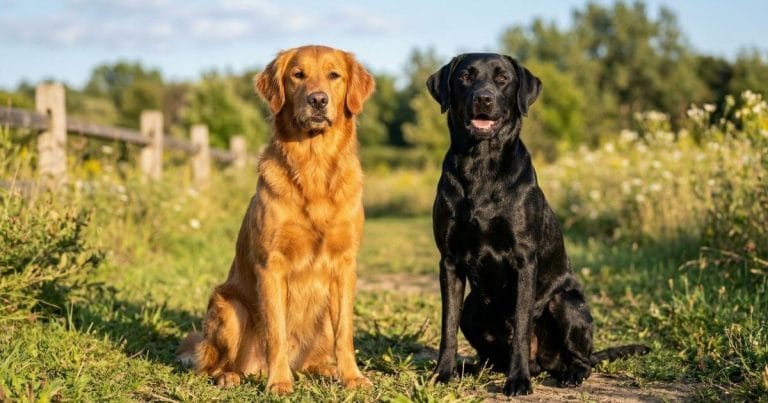
- Stud services connect owners of male dogs with owners of females for planned, responsible breeding
- Typical fees range from $500 to $2,000 for most breeds, with champion-line studs or rare breeds commanding $3,000 to $10,000+
- Every stud service arrangement needs a written contract signed by both parties before breeding
- Both dogs need breed-specific OFA health clearances, brucellosis testing, and a reproductive wellness exam
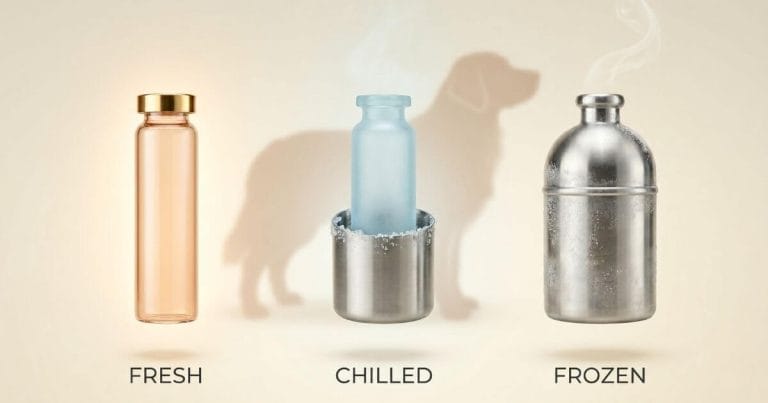
- Breeding can happen through natural cover or artificial insemination (fresh, chilled, or frozen semen)
Breeding a dog is one of the most consequential decisions a pet owner can make. Whether you own a male you want to offer as a stud or a female you want to breed, understanding how stud services work is the first step toward doing it responsibly.
This guide walks through every stage of the stud service process, from finding the right match and negotiating fees to signing a contract and preparing both dogs for breeding day. It covers advice for both stud owners and dam owners, because both sides need to get this right.
If you are new to breeding entirely, start with our complete breeding guide for beginners and come back here when you are ready to dive into the specifics of stud services.
What Are Stud Services for Dogs?
Stud services are the breeding services provided by the owner of a male dog (the stud) to owners of female dogs (the dam). The stud owner makes their male available for mating in exchange for compensation, typically a stud fee, pick of the litter, or a co-ownership arrangement.
Stud services exist because most responsible breeders do not own both a high-quality male and female within the same breeding program. Accessing outside genetic lines allows breeders to improve health, temperament, and conformation in their litters without maintaining a large kennel.
The process generally follows a predictable pattern. The dam owner researches and selects a stud, both parties verify health clearances, they agree on terms in a written contract, and the breeding takes place either naturally or through artificial insemination. After breeding, the stud owner’s involvement typically ends unless the contract specifies otherwise.
A stud service is not the same as casual or unplanned breeding. It is a deliberate arrangement between two owners who have evaluated their dogs’ health, pedigree, and temperament before proceeding.
The Stud Service Process
From research to confirmed pregnancy in 5 steps
How Much Do Stud Service Fees Cost?
Typical stud fees range from $500 to $2,000 for most breeds, with champion-line studs or rare breeds commanding $3,000 to $10,000 or more. The fee depends on the stud’s pedigree, health certifications, breeding history, breed popularity, and geographic location.
Here is a general breakdown by breed size category:
| Breed Size | Typical Fee Range | Examples |
|---|---|---|
| Small breeds | $500 to $1,500 | Shih Tzu, Pomeranian |
| Medium breeds | $750 to $2,500 | Australian Shepherd, Goldendoodle |
| Large breeds | $1,000 to $3,000 | Golden Retriever, Labrador Retriever, German Shepherd |
| Giant breeds | $1,000 to $2,500 | Great Dane, Mastiff |
| High-demand / rare breeds | $2,500 to $10,000+ | French Bulldog, Merle or rare-colour lines |
These ranges reflect stud fees only. Additional costs may include progesterone testing ($100 to $300 per test), travel expenses if the dam must be shipped or driven to the stud, artificial insemination veterinary fees ($200 to $1,000+), and brucellosis testing ($50 to $100 per dog).
The stud fee typically covers two to three breeding attempts within a single heat cycle and sometimes includes a return service guarantee if the first breeding does not produce a litter.
Stud Fee Breakdown
- 2–3 breeding attempts
- Return service clause
- Copy of stud’s health clearances
- Registration paperwork for litter
- Progesterone testing ($100–$300/test)
- Brucellosis test ($50–$100/dog)
- Travel/shipping
- AI vet fees ($200–$1,000+)
- Pre-breeding vet exam
What Types of Stud Service Arrangements Exist?
The three main stud service arrangements are flat-fee payments, pick-of-litter agreements, and co-ownership breeding deals. Each carries different risk profiles depending on whether you are the stud owner or the dam owner.
Flat-fee stud service is the most common arrangement. The dam owner pays a fixed amount before or at the time of breeding. This is the simplest structure: clear expectations, no ongoing obligations, and no disputes over puppy selection later. Most experienced breeders prefer this model.
Pick of the litter means the stud owner selects one puppy from the resulting litter instead of receiving a cash payment. This can work well when the stud owner wants to add to their own breeding program, but it introduces uncertainty. If the litter is small, both parties may feel shortchanged. The contract must specify whether the stud owner gets first or second pick, and what happens if only one puppy is born.
Co-ownership arrangements are less common and more complex. Both owners share breeding rights or ownership of one or more puppies. These require detailed contracts and a strong working relationship, since disagreements can become legally complicated.
For most first-time breeders, a flat-fee arrangement with a return service clause offers the cleanest structure.
How Do You Find a Quality Stud Dog?
Start with breed-specific parent clubs and the AKC Marketplace, where registered breeders list available studs with health clearances and pedigree information. Check the OFA database to verify any stud’s health test results independently, since not all breeders voluntarily disclose failures.
Attending dog shows and breed-specific events is one of the best ways to evaluate a stud’s conformation, temperament, and structure in person. Titles and certifications matter, but seeing the dog move and interact is something no online profile can replace.
Online platforms like PairMyPet also make it easier to search for stud dogs by breed and location. You can browse profiles, compare options, and message owners directly to start the conversation.
When evaluating a potential stud, ask these questions before committing:
- What health clearances does the stud have, and are results publicly available on the OFA database?
- Can you provide a three-generation pedigree?
- How many litters has this stud sired, and can you connect me with previous dam owners for references?
- What is the stud’s temperament like in daily life, not just in a show ring?
- What breeding method do you use (natural cover or artificial insemination)?
- What does your contract include, and do you offer a return service guarantee?
Red flags include stud owners who cannot produce health clearances, refuse to share pedigree information, or pressure you to skip a written contract. Walk away from any arrangement that does not feel transparent.
For a deeper walkthrough, see our guide to finding a stud dog.
What Health Tests Are Required Before Breeding?
At minimum, both the stud and the dam need breed-specific OFA health clearances, a brucellosis test within 30 days of breeding, current vaccinations, and a reproductive wellness exam from a veterinarian. The AKC’s CHIC program maintains a database of required tests by breed.
Health testing is non-negotiable. Breeding dogs without clearances risks passing heritable conditions to puppies, damaging your reputation, and creating lifelong health problems for families who trust you.
Core Health Tests by Category
Orthopedic clearances include hip evaluations through OFA or PennHIP and elbow evaluations through OFA. These are required for nearly all medium and large breeds, and they screen for hip dysplasia and elbow dysplasia, two of the most common inherited structural problems in dogs.
Eye certification through OFA (formerly CERF) screens for progressive retinal atrophy, cataracts, and other heritable eye conditions. Most breed parent clubs require annual eye exams.
Cardiac evaluation screens for congenital heart defects. Some breeds require only a basic veterinary cardiac exam, while others (like Doberman Pinschers and Cavalier King Charles Spaniels) need advanced echocardiograms.
DNA panels test for breed-specific genetic conditions. A DNA test before breeding can identify carriers of conditions like degenerative myelopathy, von Willebrand disease, or exercise-induced collapse, depending on the breed.
Brucellosis testing is a blood test that screens for Brucella canis, a bacterial infection that causes infertility, spontaneous abortion, and can spread between dogs during breeding. Both dogs must be tested within 30 days of the planned breeding date. No exceptions.
For a full walkthrough of what to test and when, see our health testing guide.
Required Health Tests Before Breeding
- Breed-specific OFA hip evaluation
- OFA elbow evaluation (medium/large breeds)
- OFA eye certification (annual)
- Cardiac evaluation (basic or advanced per breed)
- Breed-specific DNA panel
- Brucellosis test (within 30 days of breeding)
- Current vaccinations
- Reproductive wellness exam
- Breed-specific OFA hip evaluation
- OFA elbow evaluation (medium/large breeds)
- OFA eye certification (annual)
- Cardiac evaluation (basic or advanced per breed)
- Breed-specific DNA panel
- Brucellosis test (within 30 days of breeding)
- Current vaccinations
- Reproductive wellness exam
What Should a Stud Service Contract Include?
Every stud service arrangement needs a written contract signed by both parties before breeding takes place. Verbal agreements are not enforceable and lead to disputes over fees, puppy ownership, and return service terms.
A complete stud service contract should cover:
- Identification of both dogs, including registered names, registration numbers, breed, colour, and date of birth
- Health documentation requirements, specifying which clearances both dogs must have on file before breeding
- Compensation terms: the exact stud fee amount, payment schedule, and method (cash, pick of litter, or co-ownership)
- Number of breeding attempts included in the fee, typically two to three within a single heat cycle
- Return service clause: what happens if the breeding does not result in a pregnancy or live litter
- Puppy registration details: who registers the litter, which registry (AKC, UKC), and any restrictions on registration type (full vs. limited)
- Breeding restrictions: whether puppies can be sold with full breeding rights or must be placed on limited registration or spay/neuter contracts
- Liability and dispute resolution: who is responsible if a dog is injured during breeding, and how disagreements will be handled
Never proceed without a signed contract, even if you know the other owner personally. The contract protects both parties and sets clear expectations before emotions and puppies are involved.
The Royal Kennel Club’s guide to stud contracts provides a useful framework if you need a starting point.
How Do You Prepare Your Dog for Stud Service?
Preparation differs slightly depending on whether you own the stud or the dam, but both sides need a veterinary check and a clear timeline.
For the Dam Owner
The most important preparation step is progesterone testing. A veterinarian draws blood samples during your female’s heat cycle to pinpoint the optimal breeding window. Progesterone testing costs $100 to $300 per draw and typically requires two to four tests during a single cycle.
You should also confirm that all of your female’s health clearances are current, schedule a brucellosis test within 30 days of the planned breeding, and verify that she is at the ideal breeding age for her breed. Review our heat cycle guide if you are unsure about the signs of readiness.
In most arrangements, the dam travels to the stud. Plan your logistics in advance: transportation, boarding if needed, and a backup plan if timing does not align.
For the Stud Owner
Keep your stud in peak reproductive condition with regular exercise, a high-quality diet, and routine veterinary care. Have a current brucellosis test on file and all breed-specific health clearances ready to share with prospective dam owners.
Confirm that your stud has experience with natural breeding if that is the planned method, or that you have a relationship with a reproductive veterinarian for artificial insemination.
For Stud Owners: How to Offer Stud Services Responsibly
Offering stud services is more than posting your dog online and waiting for inquiries. Responsible stud management protects your dog’s health, your reputation, and the welfare of every litter your stud produces.
Screening Breeding Requests
Not every inquiry deserves a yes. Evaluate each dam owner’s seriousness by asking about their dog’s health clearances, their breeding goals, and whether they have a plan for placing puppies. Decline requests from owners who cannot produce health testing results or who seem focused purely on profit.
Setting Appropriate Fees
Price your stud fee based on his pedigree, titles, health clearances, and proven track record. Research what comparable studs in your breed charge. Underpricing attracts less serious inquiries; overpricing without credentials to back it up hurts credibility.
Managing Your Stud’s Schedule
A healthy adult male can breed once or twice per month without health consequences, but frequent breeding without rest periods can reduce sperm quality and stress the dog. Space breedings out and limit your stud to a sustainable number of litters per year.
The Stud Service Readiness Scorecard
Before offering your dog for stud service, assess his readiness across these ten criteria. A score of 8 or higher suggests he is ready. Below 6 means there is work to do before advertising.
Stud Service Readiness Scorecard
Is Your Dog Ready to Be a Stud?
What Is the Difference Between Natural Breeding and Artificial Insemination?
Natural breeding involves a live cover where the stud and dam mate directly, with conception rates around 80% according to breed reproduction data. Artificial insemination (AI) uses collected semen, either fresh, chilled, or frozen, and enables breeding across distances or when temperament makes natural mating difficult.
Natural Breeding
Natural cover is the simplest and least expensive method. The dam is brought to the stud’s location, and the dogs are allowed to mate under supervision. Most stud service contracts include two to three natural breeding attempts within a single heat cycle.
The main advantages are lower cost, no need for specialized veterinary equipment, and high conception rates. The limitations are that both dogs must be physically present, compatible in size and temperament, and the process can be stressful for inexperienced dogs.
Artificial Insemination
AI is the preferred method when the stud and dam are in different locations, when size or temperament differences make natural breeding risky, or when using frozen semen from a dog that is no longer available for live cover.
The AKC recognizes three AI methods:
- Fresh semen AI: Collected and inseminated the same day. Highest conception rates among AI methods (comparable to natural breeding). Lowest cost.
- Chilled semen AI: Collected, extended with a preservative solution, and shipped overnight. Viable for 24 to 48 hours. A good option when the stud is in a different region.
- Frozen semen AI: Collected, frozen in liquid nitrogen, and stored indefinitely. Requires surgical or transcervical insemination by a reproductive specialist. Lower conception rates (50 to 70%) but allows access to genetics from dogs that have passed away or are otherwise unavailable.
AI adds veterinary costs ($200 to $1,000+ depending on method) but opens up genetic options that natural breeding cannot match.
Natural Breeding vs. Artificial Insemination
Common Stud Service Mistakes to Avoid
Even experienced breeders make errors when arranging stud services. Here are the most costly ones:
- Skipping the contract. Verbal agreements fall apart the moment something goes wrong. Always sign a contract before breeding, no matter how well you know the other owner.
- Breeding without health clearances. OFA and CHIC certifications exist for a reason. Skipping them to save money or time puts puppies at risk for heritable conditions and exposes you to liability.
- Ignoring brucellosis testing. Brucella canis spreads during breeding and causes infertility, miscarriage, and long-term reproductive damage. A $50 to $100 test is cheap insurance.
- Not tracking progesterone. Breeding at the wrong time is the most common reason for failed litters. Progesterone testing eliminates guesswork and maximizes conception rates.
- Breeding too young or too old. Most breeds should not be bred before age two, when major health clearances can be completed. Breeding dogs past their prime reproductive years increases health risks for both the dam and puppies. Check our guide to best breeding age for breed-specific recommendations.
- Choosing a stud based on appearance alone. A handsome dog with poor health clearances or an unstable temperament is a liability, not an asset. Prioritize health, temperament, and pedigree over looks.
Final Thoughts
Stud services are the foundation of planned, responsible breeding programs. When done right, with verified health clearances, a signed contract, and careful preparation on both sides, they produce healthier puppies and protect everyone involved.
Whether you are searching for the right stud for your female or preparing to offer your male for breeding, the principles are the same: do the health testing, put it in writing, and never cut corners.
Find a Compatible Breeding Partner
Ready to connect with responsible breeders? Browse stud dogs on PairMyPet or create your profile to get started.
Browse Stud Dogs Create Your ProfileFor more guidance on responsible breeding practices and selective breeding strategies, explore our full library of breeding guides.
Frequently Asked Questions
A healthy adult stud can breed once or twice per month without negative effects on sperm quality or overall health. Breeding more frequently can lead to reduced fertility and increased stress. Most reproductive veterinarians recommend spacing breedings at least two weeks apart and limiting a stud to no more than 20 to 30 litters over his lifetime.
Most stud service contracts include a return service clause that guarantees one additional breeding at no extra charge during the dam’s next heat cycle. This is standard practice in responsible breeding. If your contract does not include this, negotiate it before signing. The return service typically expires after one additional attempt.
Yes. Many breeders use studs from other regions to access specific genetic lines. For distant studs, chilled or frozen semen shipped to your reproductive veterinarian is the most practical option. The AKC accepts litters produced through artificial insemination as long as proper documentation is submitted. International breedings may require additional import/export paperwork depending on the countries involved.
Most breeders wait until a stud is at least two years old before breeding. This allows time to complete breed-specific health clearances (OFA hip and elbow evaluations require the dog to be at least 24 months old) and to evaluate the dog’s conformation, temperament, and overall development. Breeding before health testing is complete puts future litters at risk.
Registration with the AKC, UKC, or another recognized kennel club is not legally required, but it is strongly recommended. Most reputable stud owners require the dam to be registered before agreeing to a breeding. Registration proves lineage, ensures puppies are eligible for their own registration, and signals that both owners are invested in responsible breeding standards.
From initial research to confirmed pregnancy, the typical timeline is four to eight weeks. This includes finding and evaluating a stud (one to four weeks), scheduling around the dam’s heat cycle, completing progesterone testing and breeding (one to two weeks during the cycle), and confirming pregnancy via ultrasound around 25 to 30 days after breeding. The actual breeding itself, whether natural or AI, takes only a few minutes to an hour per attempt.