
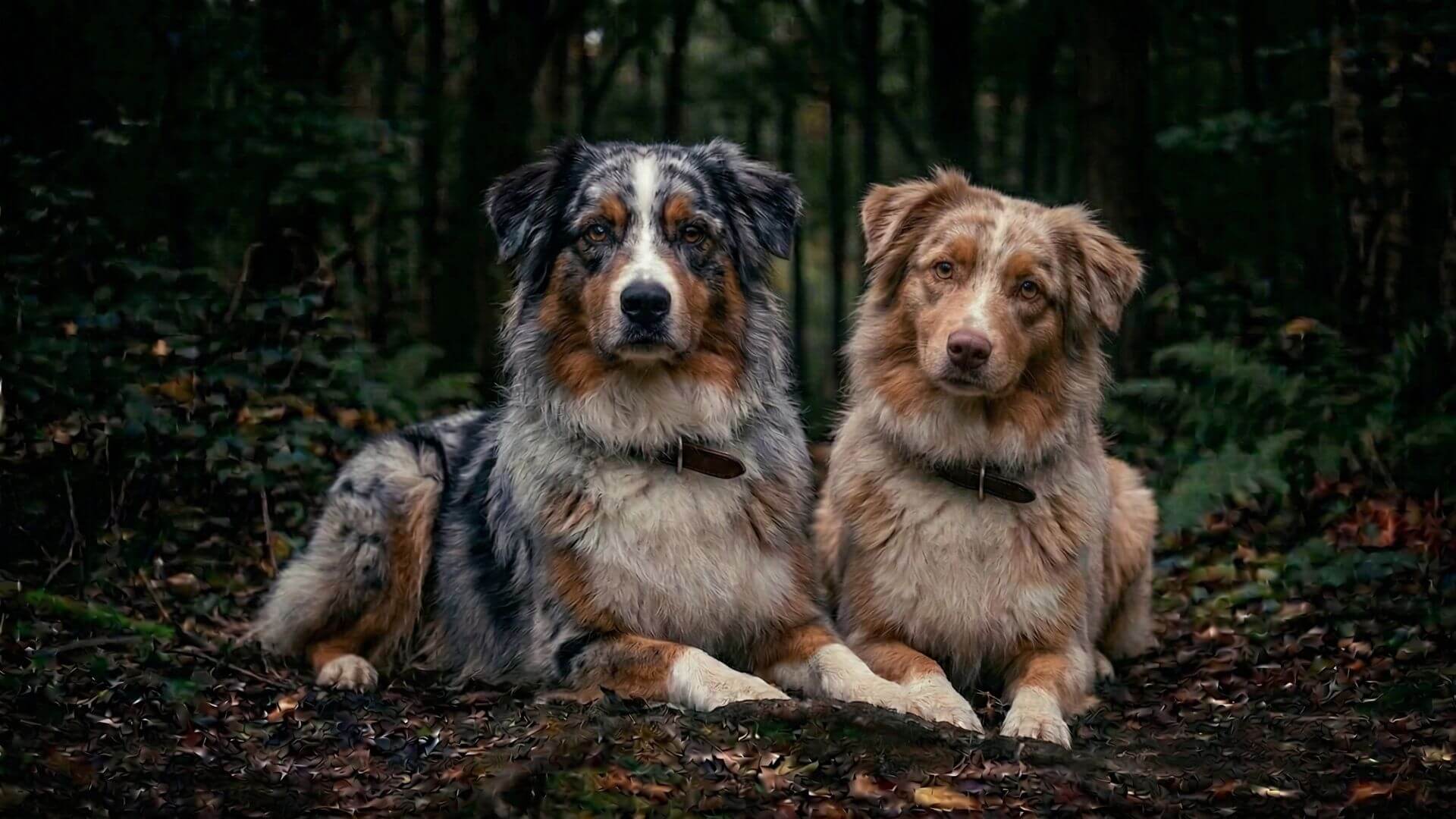
Australian Shepherd Stud Dogs for Breeding
Browse verified Australian Shepherd stud dogs with health clearances for MDR1, hips, eyes, and hereditary cataracts. Connect with responsible breeders near you.
In This Guide
Featured Australian Shepherd Studs
Health-tested and verified breeders ready to connect
Message stud owners directly. No middleman.
What Health Tests Should an Australian Shepherd Stud Have?
An Australian Shepherd stud should have OFA hip and elbow evaluations, annual eye exams by a board-certified veterinary ophthalmologist, and DNA testing for MDR1 (Multi-Drug Resistance 1), HSF4 hereditary cataracts, and CEA/CH (Collie Eye Anomaly/Choroidal Hypoplasia) per USASA (United States Australian Shepherd Association) and ASCA (Australian Shepherd Club of America) breed club standards.
MDR1 is the critical test for this breed. Approximately 50% of Australian Shepherds carry the MDR1 mutation. Dogs with the MDR1 mutation are sensitive to certain medications, including ivermectin (common parasite treatments) and some chemotherapy drugs. An affected dog (mm genotype) given ivermectin can experience neurological toxicity, ranging from tremors to seizures or death. Testing before breeding is non-negotiable.
Hip dysplasia screening is essential. OFA ratings of Good or Excellent are preferred, but Fair is acceptable for breeding if the stud has no dysplasia in offspring. Verify scores directly on the OFA database.
Eye exams screen for progressive retinal atrophy, hereditary cataracts, and collie eye anomaly. HSF4 hereditary cataracts appear as juvenile cataracts in some Australian Shepherds and can progress to blindness. CEA/CH causes retinal and choroidal abnormalities and varies from subclinical to vision-threatening. Both conditions require DNA testing in addition to clinical exam. Results must be registered with the OFA and performed by an ACVO-certified ophthalmologist. Certifications expire after 12 months.
The CHIC program for Australian Shepherds requires hips, elbows, eyes, and MDR1 DNA testing. Additional recommended tests include HSF4 hereditary cataracts and CEA/CH. All results should be registered with the OFA database. A CHIC number confirms completion but does not guarantee results.
Learn more: Health Testing Before Breeding
CHIC Health Tests for Australian Shepherds
Essential evaluations for responsible Aussie breeding
MDR1 Drug Sensitivity: The #1 Concern for Aussie Breeders
MDR1 (Multi-Drug Resistance 1) is the defining health test for Australian Shepherds. This single genetic marker determines which dogs can safely receive common veterinary medications.
The MDR1 mutation affects the P-glycoprotein transporter in the blood-brain barrier. Dogs with two copies of the mutation (mm genotype) cannot effectively exclude certain drugs from the brain, leading to neurological toxicity. The most notorious example is ivermectin, used in heartworm prevention (Heartgard), mange treatment, and parasite control. A dose safe for a normal dog can cause seizures, tremors, or death in an MDR1-affected dog.
Other affected medications include milbemycin (related to ivermectin), some anticancer drugs (doxorubicin, vincristine), loperamide (Imodium), domperidone, and macrolide antibiotics. The list continues to grow as new interactions are discovered.
Here are the three MDR1 genotypes and their implications:
M/M (homozygous normal): Two normal copies. Can receive any medication safely. No risk to offspring unless bred to an M/m carrier.
M/m (heterozygous carrier): One normal, one mutated copy. Typically tolerates normal drug doses but may show sensitivity at higher dosages. Carriers live normal lives. Produces affected puppies when bred to another carrier or to an m/m dog.
m/m (homozygous affected): Two mutated copies. High neurological sensitivity to ivermectin and related drugs. Must avoid MDR1-sensitive medications entirely. Breeding two affected dogs produces 100% affected puppies.
MDR1 DNA testing costs $50 to $100 and provides a definitive answer. Testing before breeding prevents accidental production of m/m puppies with lifelong medication restrictions. If you breed two carriers (M/m x M/m), 25% of puppies will be m/m.
Responsible breeders test before breeding and clearly communicate status on profiles.
An MDR1 m/m dog can still be a beloved pet and family companion. The key is avoiding the specific medications and ensuring owners and veterinarians know the status. For breeding purposes, avoid m/m studs or dams entirely unless you have a compelling genetic reason and are fully transparent about risk.
MDR1 Inheritance Patterns
Three possible genotypes and breeding outcomes
How Much Does an Australian Shepherd Stud Fee Cost?
Australian Shepherd stud fees typically range from $800 to $3,000 or more, depending on health testing, titles, pedigree, and breeding history.
Companion-quality studs with basic health clearances (hips, eyes, MDR1 test) sit at $800 to $1,500. Studs with full CHIC certification, OFA Good hips, and proven breeding history command $1,500 to $2,500. Titled studs with herding titles (HT, PT, HERX), agility titles (MACH, AX), conformation titles (CH/GCH), or multiple generations of health clearances reach $2,000 to $3,000 or more. Some breeders offer pick-of-litter agreements as an alternative to cash.
Always ask what is included in the fee. Does it cover one or two breeding attempts, a live litter guarantee, or a return breeding if the litter is small?
Total breeding costs go beyond stud fees. Budget $100 to $200 for progesterone testing to time the breeding correctly, $300 to $600 for artificial insemination if using shipped semen, and $500 to $1,500 for whelping supplies and puppy care through 8 weeks.
Australian Shepherds typically deliver naturally, though litters are smaller than Labradors (4 to 8 puppies is average, with 2 to 10 possible). Cesarean sections are uncommon in the breed. However, care and nutrition costs still add up during the nursing period.
Get everything in writing. A stud contract should cover live litter guarantees, liability, MDR1 status of both dogs, merle breeding rules (see below), health testing proof, and what happens if the breeding does not take.
Learn more: Stud Services for Dogs
Stud Fee Ranges
Typical pricing based on titles, testing, and pedigree
Total Breeding Budget
Stud fee to 8-week puppies
Ready to find the right stud? Browse Australian Shepherd studs and connect with owners directly.
Browse Australian Shepherd StudsMerle Breeding Safety and Double Merle Risks
The merle coat pattern in Australian Shepherds is defined by the merle allele (M). This single dominant gene creates the distinctive mottled blue merle, red merle, or tri-colour patches. Merle is striking in appearance and popular, but breeding merle to merle produces catastrophic results.
Australian Shepherds have two standard merle phenotypes: blue merle (black base with merle pattern) and red merle (red/chocolate base with merle pattern). The breed also recognizes solid colours: black tri and red tri. Merle is present in blue merles and red merles.
Here is the genetic reality. Merle is controlled by a single allele, with two possible alleles at the merle locus: M (merle) and m (non-merle). The three possible genotypes are:
m/m (homozygous non-merle): Solid colour. Black tri or red tri. Can be bred to any colour.
M/m (heterozygous, merle carrier): Merle phenotype. Typically blue merle or red merle. Breeding to another M/m or to an M/M produces affected puppies.
M/M (homozygous merle, double merle): Merle phenotype. Breeding two merles produces 25% double merle puppies.
Double merle puppies (M/M genotype) have two copies of the merle allele. This causes severe developmental abnormalities. Most double merle puppies are born deaf, blind, or both. Some are born with microphthalmia (undersized eyes), reduced or missing pupils, and neurological defects. Deafness occurs in up to 25% of double merle puppies from merle-to-merle breedings; blindness is nearly as common. Survivors face lifelong vision and hearing impairments.
This is not a rare occurrence. Merle-to-merle breeding has a 25% chance of producing double merle puppies with these devastating defects.
The rule is absolute: Never breed merle to merle. If you have a merle dam or stud, only pair with a solid-coloured dog (black tri or red tri, m/m genotype). If your dam is solid-coloured, you can safely breed to a merle stud.
Australian Shepherd breed clubs (ASCA and USASA) explicitly recommend against merle-to-merle breeding. Responsible breeders know their merle dog’s genotype and breed accordingly.
When evaluating a merle stud, ask: What is your breeding experience with merle? Will you breed a merle bitch to this stud? If the answer is “only to solid-coloured bitches,” that is the right answer. If the breeder does not understand merle genetics or has bred merle-to-merle in the past, move on.
For dams, if you have a merle, select a solid-coloured stud (m/m, either black tri or red tri). If you have a solid-coloured dam, you can pair with either a merle or solid-coloured stud.
Merle-to-Merle Breeding Outcomes
The dangers of breeding two merles
Working vs Show Lines: Which Stud Is Right for You?
Australian Shepherds have diverged into two distinct breeding lines over decades of selective breeding. Working (herding) lines and show (conformation) lines differ significantly in drive, structure, and intended purpose.
Working (Herding) Lines are bred for cattle herding, sheep herding, and ranch work. These dogs have intense focus, fast movement, and strong instinct. They excel at herding tests (HT, PT, HERX), ranch work, and competitive sports like agility and dock diving. Working lines tend toward medium bone, leaner musculature, and higher energy. They need a job; idle time leads to boredom and destructive behaviour. Expect 1.5 to 2+ hours of rigorous daily exercise or work.
Show (Conformation) Lines are bred for conformation rings, emphasizing structure, balance, and breed standard adherence. These dogs have moderate energy, sound movement, and polished presentation. They excel in conformation shows and make steady family companions. Show lines tend toward heavier bone, more coat, and calmer temperament. One to 1.5 hours of daily exercise is sufficient.
Some breeders intentionally cross the lines to balance drive with trainability or to improve conformation while retaining working ability. This is a more advanced pairing decision requiring deep knowledge of both types.
Working vs Show Australian Shepherds
Working (Herding)
- Intense focus, strong herding instinct
- Medium bone, leaner build, faster movement
- Bred for cattle/sheep work, herding tests (HT, PT, HERX)
- High drive, needs a job
- 1.5–2+ hours daily exercise or work required
- May not be ideal for sedentary households
Show (Conformation)
- Balanced temperament, moderate energy
- Heavier bone, more coat, polished movement
- Bred for conformation rings, CH/GCH titles
- Moderate to high energy, suits varied households
- 1–1.5 hours daily exercise sufficient
- Better for first-time owners of the breed
Your breeding goals determine which type to select. If your dam is a working dog and your buyers want herding prospects or competitive partners, pair with a working stud carrying HT, PT, or HERX titles. If your dam is show type and your buyers want family companions or conformation prospects, match with a show stud who complements her structure.
Use PairMyPet to browse stud profiles by breed and location, then message owners directly to discuss MDR1 status, merle genetics, health clearances, and breeding terms.
Coat Colour Genetics and Merle Gene Inheritance
The AKC breed standard recognises four standard colours in Australian Shepherds: black tri, red tri, blue merle, and red merle. Understanding the genetics behind these colours, especially the merle gene, is essential for responsible breeding.
Australian Shepherd coat colour is controlled by two primary gene loci. The B locus determines black versus red: the B allele is dominant (one copy produces black), while the b allele is recessive (two copies produce red or brown). The E locus determines whether colour is expressed; the recessive e/e genotype restricts pigment and produces lighter tones, though this is rare in Australian Shepherds.
The M locus controls the merle pattern. The dominant M allele creates the mottled merle phenotype. The recessive m/m genotype produces a solid colour. As discussed above, M/M (double merle) is dangerous and should be avoided entirely.
White markings are controlled by the S locus (spotting). The dominant S allele produces white markings on the face, chest, and legs typical of Australian Shepherds. The recessive s/s genotype produces more extensive white (piebald pattern). Extreme white markings are less desirable and may reduce litter value, but they do not affect health.
For breeders, the practical rules are simple. If your dam is merle (M/m), select only a solid-coloured stud (m/m). If your dam is solid-coloured (m/m), you can pair with either merle or solid. Never breed merle to merle.
Two black tris (both B/_) can produce all three black phenotypes (black tri, black tri carrier of b, or even some recessive red tris if both parents carry b alleles). Two red tris will only produce red tris. Crossing black and red tris is a common and productive breeding.
Learn more: DNA Testing Before Breeding
Australian Shepherd Coat Colour Genetics
Standard colours and merle inheritance
4 Recognized Colours
B/_ + m/mBlack base with white markings and tan points. Most common.b/b + m/mRed/brown base with white markings and tan points.B/_ + M/mBlack merle pattern with white markings and tan points. M/m genotype.b/b + M/mRed merle pattern with white markings and tan points. M/m genotype.Double Merle
M/M genotype25% of merle x merle puppies. Deaf, blind, or both. NEVER breed merle to merle.S/_: Standard white (face, chest, legs)
s/s: Piebald pattern (extensive white)
How to Choose the Right Australian Shepherd Stud
Start with health clearances. OFA hips and elbows, ACVO eye exam (within 12 months), MDR1 DNA test, and ideally HSF4 and CEA/CH tests completed. Verify results directly on the OFA database rather than relying on claims.
Next, confirm merle status and safety. If the stud is merle (M/m), ensure the contract and profile explicitly state “merle-safe breeding only” or “solid-coloured dams only.” If the stud is solid (m/m), note that directly too. Ask the breeder about their merle breeding history and philosophy.
Evaluate MDR1 status carefully. An m/m (affected) stud should only be bred if there is a compelling genetic reason (exceptional working or show prospect) and only to M/M females (which will produce all M/m carrier puppies). This is an advanced decision for experienced breeders. For most breeders, select an M/M or M/m stud.
Assess temperament and working ability. Australian Shepherds should be smart, alert, confident, and task-oriented. For working dogs, look for natural herding instinct, control, and steadiness. For show dogs, evaluate structure, movement, and balance against the AKC breed standard.
Review pedigree and calculate coefficient of inbreeding (COI). Aim for COI below 5% to maintain genetic diversity. Ask for a five-generation pedigree.
Look at breeding history. Has the stud produced healthy litters? Are previous dam owners willing to give references? A proven stud with documented offspring gives confidence.
If possible, meet the stud in person or request video showing movement, temperament, and structure.
Stud Evaluation Checklist
Essential criteria when selecting an Australian Shepherd stud
What to Look For (and What to Avoid)
Green Flags
- Shares full OFA and MDR1 results upfront
- Offers stud contract with live litter guarantee and merle rules
- Provides HSF4/CEA/CH testing or has plan to test
- Avoids merle-to-merle breedings
- References from previous dam owners available
- Allows video calls or in-person visits
Red Flags
- Refuses to share health test results or MDR1 status
- No written stud contract
- Bred merle to merle previously or does not understand merle genetics
- Markets m/m dogs without explaining medication restrictions
- Pressures quick decisions or non-refundable deposits
- Promises “rare colours” or unusual genetic combos without transparency
Know what to look for? Browse studs that meet your criteria.
Find Your Australian Shepherd StudHow to Find an Australian Shepherd Stud on PairMyPet
Finding a verified Australian Shepherd stud takes four steps on PairMyPet. No cold-calling breeders, no scrolling Facebook groups for hours.
Create Your Dam’s Profile
Sign up and add your dam’s photo, breed, age, and a short description. This takes about 5 minutes. Your profile becomes searchable too, so stud owners can find you and reach out directly.
Browse Stud Profiles by Breed
Browse stud profiles by breed and location. Review photos and descriptions to shortlist studs that match your breeding goals.
Compare Profiles
Compare stud profiles side by side. Look at photos, descriptions, and owner details before reaching out.
Message Stud Owners
Contact stud owners through PairMyPet’s messaging system. Ask about MDR1 status, merle genetics, health clearances, breeding terms, and stud contracts. Most owners respond within 24 hours.
Frequently Asked Questions
What health tests should an Australian Shepherd stud have?
An Australian Shepherd stud should have OFA hip and elbow evaluations, an annual eye exam by an ACVO ophthalmologist, and DNA tests for MDR1, HSF4 hereditary cataracts, and CEA/CH. The USASA, ASCA, and CHIC program define these as the breed standard for responsible breeding. Verify results directly on the OFA database.
What is MDR1 and why does it matter?
MDR1 (Multi-Drug Resistance 1) is a genetic mutation affecting how certain medications are processed in the brain. Dogs with two copies of the mutation (m/m genotype) are sensitive to ivermectin (heartworm prevention, mange treatment) and related drugs, which can cause neurological toxicity or death at normal doses. Approximately 50% of Australian Shepherds carry the mutation. DNA testing before breeding prevents producing m/m puppies with lifelong medication restrictions.
Can I breed my merle Australian Shepherd?
Yes, if you breed only to a solid-coloured (black tri or red tri) dog with an m/m genotype. Never breed merle to merle. Merle-to-merle breeding produces 25% double merle puppies (M/M genotype) that are typically deaf, blind, or both. This is a catastrophic outcome and completely avoidable through responsible breeding.
How much is an Australian Shepherd stud fee?
Stud fees range from $800 to $3,000+ depending on health testing, titles, bloodline, and breeding history. Companion-quality studs cost $800 to $1,500. Titled studs with herding titles (HT, PT, HERX) or conformation titles (CH/GCH) with full CHIC clearances reach $2,000 to $3,000 or more. Always ask what is included (breeding attempts, live litter guarantee, return breeding). Some breeders offer pick-of-litter agreements as an alternative.
What are the differences between working and show Australian Shepherds?
Working (herding) lines are bred for cattle and sheep herding, herding tests, and competitive sports. They have intense focus, higher drive, and need 1.5 to 2+ hours of daily exercise or work. Show (conformation) lines are bred for conformation rings and companionship. They have moderate energy, sound structure, and need about 1 to 1.5 hours of daily exercise. Both are the same breed. Your breeding goals and puppy buyer market determine which to pair with.
What is the coefficient of inbreeding and why does it matter?
Coefficient of inbreeding (COI) measures the degree of genetic relationship between a dam and stud based on their pedigree. Higher COI increases the risk of genetic problems and reduces genetic diversity. Aim for COI below 5% when selecting a stud. Ask the stud owner for a five-generation pedigree and COI calculation.
Do Australian Shepherds need artificial insemination?
No, most Australian Shepherds breed naturally without AI. Their athletic, balanced build makes natural mating the standard approach. AI becomes relevant when the dam and stud are in different regions and semen is shipped, or when a veterinarian recommends it based on the dam’s anatomy. Discuss options with your reproductive vet and the stud owner.
What should a stud contract include?
A stud contract should cover the stud fee amount, number of breeding attempts included, live litter guarantee terms, return breeding policy if the litter is small, health testing documentation, MDR1 and merle status of both dogs, breeding restrictions (e.g., merle x solid only), and liability for veterinary complications. Get everything in writing before the first breeding attempt.
Find Your Perfect Australian Shepherd Stud
Finding the right stud takes research, but it sets up your litter for health, temperament, and longevity. Use PairMyPet to connect with verified breeders who have already invested in CHIC certifications, MDR1 screening, merle breeding awareness, and thoughtful pedigree planning.
Get Started