
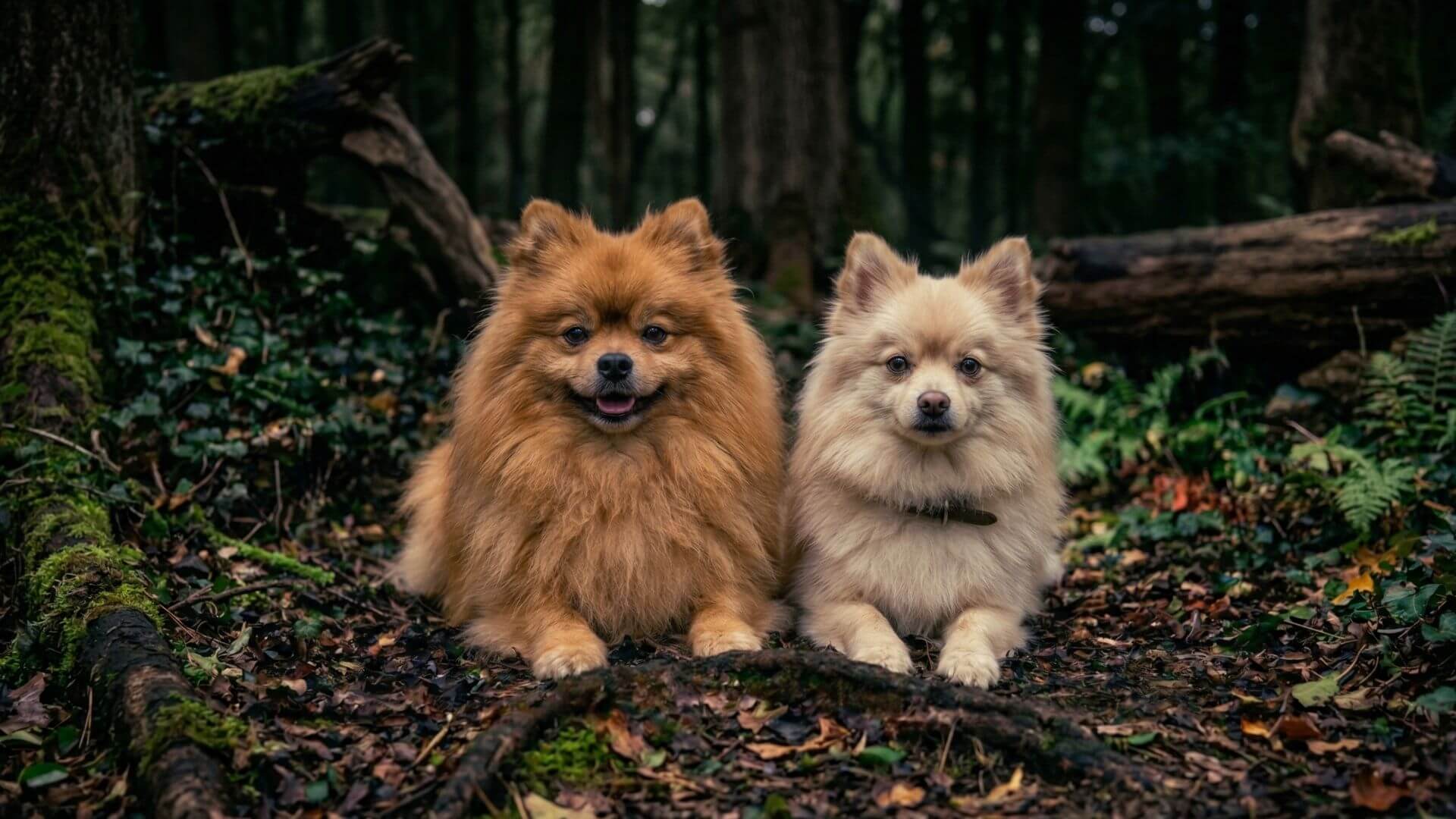
Pomeranian Stud Dogs for Breeding
Browse verified Pomeranian stud dogs with health testing, CHIC clearances, and documented colour genetics. Connect with responsible breeders near you.
In This Guide
Featured Pomeranian Studs
Health-tested and verified breeders ready to connect
Message stud owners directly. No middleman.
What Health Tests Should a Pomeranian Stud Have?
A Pomeranian stud should have patellar luxation screening, cardiac evaluation, eye exam by a board-certified ophthalmologist, hypothyroidism testing, and Legg-Calve-Perthes disease screening per the American Pomeranian Club and CHIC program requirements.
Patellar luxation (loose kneecaps) is the most common orthopaedic concern in Pomeranians. The condition ranges from Grade I (asymptomatic) to Grade IV (severe, debilitating). Only studs with Grade I patellar luxation should be used for breeding. OFA patellar evaluation rates as Normal, Borderline, or Luxated. Normal is the requirement; Borderline and Luxated should disqualify a stud.
Cardiac evaluation screens for heart defects, most commonly patent ductus arteriosus (PDA), mitral valve dysplasia, and dilated cardiomyopathy. A board-certified cardiologist must perform the exam, and results must be registered with the OFA. This test should be repeated annually or every two years, depending on results.
Eye exams screen for progressive retinal atrophy, cataracts, and corneal dystrophy. The exam must be performed by a veterinarian board-certified by the American College of Veterinary Ophthalmologists (ACVO), and results registered with the OFA. Eye certifications expire after 12 months, so verify the exam date is current.
Hypothyroidism testing identifies carriers of autoimmune thyroid disease, which is common in Pomeranians. A baseline thyroid panel (T4, free T4, TSH) documents the stud’s thyroid status. Some lines show elevated prevalence of hypothyroidism, making this test essential. DNA testing for hypothyroidism autoimmunity is not yet available, so breeding decisions rely on baseline thyroid function.
Legg-Calve-Perthes disease (LCPD) causes femoral head necrosis in young dogs, typically between 4 and 12 months of age. There is no pre-breeding test, so management relies on pedigree history and avoiding known carriers. Ask the stud owner whether LCPD appears in the pedigree.
All results should be registered with the OFA database and verified through the CHIC program. A CHIC number confirms that all required tests have been completed, though it does not guarantee the results. When reviewing stud profiles, ask for copies of all test results and OFA registration numbers.
Learn more: Health Testing Before Breeding
CHIC Health Tests for Pomeranians
5 core evaluations for responsible Pomeranian breeding
How Much Does a Pomeranian Stud Fee Cost?
Pomeranian stud fees typically range from $500 to $4,000 or more, depending on health clearances, bloodline recognition, colour rarity, and whether the stud has a proven track record of healthy litters.
Companion-quality studs with basic health clearances sit at $500 to $1,500. Studs with full CHIC certification, OFA Normal patellar scores, and documented breeding history command $1,500 to $2,500. Champion-titled studs with conformation or performance titles, show wins, or rare colour genetics reach $2,500 to $4,000. Some studs carrying rare colours (blue, chocolate, sable, merle, beaver) command premium fees, even at $4,000 to $5,000 if the colour genetics are well-documented.
Always ask what’s included in the fee: does it cover one or two breeding attempts, a live litter guarantee, or a return breeding if the litter is small?
Total breeding costs go beyond stud fees. Budget $100 to $200 for progesterone testing to time the breeding correctly, $300 to $800 for artificial insemination (nearly always required for Pomeranians due to size differences), and $400 to $1,200 for whelping supplies and puppy care through 8 weeks.
Pomeranian dam breeding carries significant surgical risk. Caesarean sections are common and often necessary, costing $1,000 to $3,000 or more. Some bitches cannot deliver naturally due to narrow pelvises or small litter size relative to puppy size. Litter sizes are small (1 to 5 puppies is typical), meaning high per-puppy investment in veterinary care, supplies, and time.
Get everything in writing. A stud contract should cover live litter guarantees, liability for failed breedings, health testing proof, and what happens if natural breeding is not possible and AI is required.
Learn more: Stud Services for Dogs
Stud Fee Ranges
Typical pricing based on titles, certifications, and colour
Total Breeding Budget
Stud fee to 8-week puppies
Ready to find the right stud? Browse Pomeranian studs and connect with owners directly.
Browse Pomeranian StudsWhy Artificial Insemination Is Critical for Pomeranians
Pomeranians are a toy breed where natural breeding is often impossible or unsafe. Artificial insemination (AI) is the standard approach for responsible Pomeranian breeding. Size differences between stud and dam, fragility of the breed, and risk of injury make AI the preferred method in most cases.
Natural breeding in Pomeranians poses physical risk to the dam. Males weigh 3 to 7 pounds; physically mounting can cause rib fractures, spine misalignment, or internal trauma. Many breeders refuse natural breeding entirely and require AI.
Chilled semen is shipped overnight and inseminated within 24 to 48 hours. Conception rates with properly timed vaginal or transcervical AI reach 60 to 75%. Frozen semen requires transcervical insemination (TCI) or surgical implantation, with success rates of 70 to 85% when timing is managed with progesterone testing. Both methods require progesterone testing ($100 to $200) to pinpoint ovulation precisely.
A reproductive veterinarian familiar with toy breed AI is essential. Transcervical insemination requires specialised equipment and expertise. Ask the stud owner whether they support AI and have successfully produced litters via this method.
Discuss AI logistics, timing, and veterinary support with both the stud owner and your reproductive vet before committing. Shipping arrangements, semen quality guarantees, and backup plans are critical for toy breed breeding.
Learn more: Breeding Guide
Pomeranian Colour Genetics: The Complete Guide
Pomeranians have one of the widest colour ranges of any dog breed. The AKC breed standard recognises any solid colour, parti-colour, sable, black and tan, brindle, and red, with no preference for one colour over another. This opens extraordinary variety in breeding outcomes.
Pomeranian coat colour is controlled by several gene loci. The B locus determines black versus brown (chocolate or beaver): the B allele is dominant (one copy produces black), while the b allele is recessive (two copies produce brown). The E locus determines whether colour is expressed at all: the recessive e/e genotype blocks pigment, producing cream or white, regardless of B locus status.
The A locus controls sable patterning and agouti banding. Sable Pomeranians have dark guard hairs over a lighter undercoat. The K locus modifies base colour to produce brindle: the dominant K allele produces brindle, while k/k produces the base colour unbanded. The D locus dilutes colour: the recessive d/d genotype dilutes black to blue (slate), chocolate to lilac (lavender), and cream to pale cream.
Red, orange, and sable Pomeranians are among the most popular. Parti-colour (two or more colours, typically white with red or black patches) commands high fees. Blue (dilute black) and lilac (dilute chocolate) are increasingly fashionable but rare. Beaver (dilute brown) is uncommon and highly sought in certain bloodlines.
Pomeranian colour genetics is more permissive than many large breeds. The AKC standard accepts all colours and patterns, so breeding decisions focus on health, not colour restriction. Many breeders specialise in specific colours (blue, sable, parti-colour) and are happy to match dams with studs of complementary genetics.
DNA testing for the B, E, A, K, and D loci identifies carrier status and allows precise prediction of puppy colours. If you want a specific colour outcome (parti-colour, sable, blue), ask the stud owner for colour genetics documentation and use a DNA testing laboratory to confirm expected results.
Merle colouring in Pomeranians is rare but carries health risks. Merle is linked to eye defects, hearing loss, and increased photosensitivity. Some breed clubs discourage merle breeding. If considering a merle stud, verify health clearances carefully and discuss CERF eye testing results.
Learn more: DNA Testing Before Breeding, Stud Dog Directory
Pomeranian Colour Genetics
All AKC recognised — no colour restrictions
B/_ + E/_ + A/a or a/a
Most common. Ranges from light cream to deep red.
B/_ + E/_ + Sa or s/a
Dominant. May show sable patterning.
b/b + E/_
Recessive at B locus. Ranges from milk to dark brown.
B/_ or b/b + e/e
E locus blocks pigment. White to pale cream.
B/_ + E/_ + d/d
Dilute gene at D locus. Rare and fashionable.
b/b + E/_ + d/d
Double recessive b/b + dilute d/d. Very rare.
b/b + E/_ + d/d
Dilute brown. Increasingly popular, carrier of dilute gene.
Any base + white patches
Two or more colours. No colour preference.
Rare & Complex Colours
- Sable: Overlay of dark guard hairs on lighter base, controlled by A locus
- Brindle: Dark stripes on base colour, controlled by K locus
- Merle: Mottled or patchy coat pattern, linked to blue eyes, higher risk of deafness
- Black and Tan: Black body, tan markings on legs, chest, face
Standard vs Throwback Pomeranians: Which Stud Type?
Pomeranians have subtly diverged into two informal types over decades of selective breeding. The terms “Standard” and “Throwback” are not official AKC designations; both are the same breed per the AKC breed standard. However, breeding history and type differ meaningfully.
Standard Pomeranians are bred to the modern show standard. They have finer bone, longer coat, more delicate build, and weigh closer to 3 to 5 pounds. They excel in conformation rings and are preferred by show exhibitors. Health screening is increasingly common in show lines. Temperament is spirited but bred for handler focus and trainability.
Throwback Pomeranians are larger, more substantial dogs, often weighing 5 to 7 pounds or slightly above breed standard. They have stronger bone, slightly shorter coats, and more independent temperament. Some exhibit hunting or herding instinct inherited from ancient Spitz ancestry. Throwbacks are popular among pet owners who prefer a sturdier dog but still want the Pomeranian personality.
Standard vs Throwback Pomeranians
Standard (Modern Show Type)
- Finer bone, longer coat, more delicate
- Weight typically 3–5 lbs
- Bred for conformation shows and handler focus
- Fine features, refined movement
- Higher coat maintenance
- Smaller litter size (1–2 puppies common)
Throwback (Larger Type)
- Stronger bone, slightly shorter coat, more substantial
- Weight typically 5–7 lbs (some above standard)
- Bred for soundness and independence
- More athletic build, sturdier frame
- Easier grooming and coat care
- Slightly larger litters possible (2–4 puppies)
Your breeding goals determine which type to choose. If your dam is a Standard show type and your buyers want show prospects or compact companions, pair with a Standard stud matching her refined structure. If your dam is a Throwback and your buyers want hardier family pets, match with a Throwback stud emphasising soundness.
Some breeders intentionally cross the types to balance refinement with structural stability. This is a more advanced pairing decision that requires understanding what each type contributes to offspring.
Breeding Considerations: Small Size, Large Risks
Pomeranian breeding carries unique challenges due to the breed’s tiny size. Dams face high whelping risk; litters are small; and neonatal mortality is higher than in larger breeds. Responsible breeders screen dams carefully and plan caesarean sections in advance.
Whelping Risk and Caesarean Sections. Pomeranians have high rates of dystocia (difficult labour) and often require caesarean sections. Causes include narrow pelvises relative to puppy size, weak uterine contractions, and single large puppies. Some bitches cannot deliver naturally and must be scheduled for elective C-sections before labour begins. Budget $1,000 to $3,000 for a possible surgical delivery.
Small Litter Size. Pomeranian litters are small: 1 to 5 puppies is typical, with many litters having just 1 to 2 puppies. This means high per-puppy investment in food, veterinary care, and supplies. A two-puppy litter costs almost as much to raise as a six-puppy litter in a larger breed. Breeders must price puppies accordingly and plan for the possibility of a single puppy.
Single Puppy Syndrome. A single puppy can develop behavioural problems: excessive bonding to the dam, poor socialisation, and difficulty adjusting to new homes. Some breeders recommend careful early handling and deliberate exposure to stimuli. Others cross single puppies with other breeders to promote healthier development.
Neonatal Mortality. Pomeranian puppies are fragile. Mortality from congenital defects, failure to thrive, and accidental crushing by the dam is higher than in larger breeds. Careful monitoring, supplemental feeding if needed, and prompt veterinary intervention save lives.
Temperature Sensitivity. Pomeranian puppies cannot regulate body temperature effectively for the first few weeks. Breeders must maintain a heated puppy area (85 to 90 degrees Fahrenheit) and monitor constantly.
Colour and Genetic Diversity. Small gene pools in Pomeranian breeding increase inbreeding risk. Calculate the coefficient of inbreeding (COI) before pairing; aim for COI below 6.25%. Some lines have limited health diversity, making careful pedigree selection essential.
Ask the stud owner about his dam’s whelping history, C-section experience, and support for AI breeding. A reputable stud owner should have successful litters documented and willing to discuss realistic expectations.
Key Breeding Challenges
What to prepare for when breeding Pomeranians
How to Choose the Right Pomeranian Stud
Use PairMyPet to browse stud profiles by breed and location, then message owners directly to discuss health clearances, pedigree, and breeding terms.
Evaluate temperament and structure. Pomeranians should be confident, lively, and inquisitive without timidity or excessive aggression. For show dogs, assess structure against the AKC breed standard: look for balance, correct head type, and proper angulation. For pet lines, prioritise stable temperament and soundness.
Review the stud’s pedigree and calculate the coefficient of inbreeding (COI). Aim for COI below 6.25% to maintain genetic diversity. Ask the stud owner for a five-generation pedigree.
Look at breeding history. Has the stud produced healthy litters? Are previous dam owners willing to give references? A proven stud with documented offspring gives you more confidence than an unproven dog. Ask about dam whelping outcomes: did they deliver naturally or require C-sections?
If you want specific colour outcomes, ask for colour genetics documentation. DNA testing results for B, E, A, K, and D loci should be available to predict puppy colours accurately.
Stud Evaluation Checklist
Essential criteria when selecting a Pomeranian stud
What to Look For (and What to Avoid)
Green Flags
- Shares full OFA/CHIC results upfront
- Offers stud contract with live litter guarantee
- Discusses whelping history and C-section experience openly
- References from previous dam owners available
- Supports artificial insemination and recommends reproductive vet
- Provides colour genetics documentation
Red Flags
- Refuses to share health test results or OFA numbers
- No written stud contract
- Promotes unproven breeding claims or “rare” colours at premium prices
- No cardiac or eye testing despite breed risk
- Pressures quick decisions or non-refundable deposits
- No experience with AI despite breed necessity
Know what to look for? Browse studs that meet your criteria.
Find Your Pomeranian StudHow to Find a Pomeranian Stud on PairMyPet
Finding a verified Pomeranian stud takes four steps on PairMyPet. No cold-calling breeders, no scrolling Facebook groups for hours.
Create Your Dam’s Profile
Sign up and add your dam’s photo, breed, age, and a short description. This takes about 5 minutes. Your profile becomes searchable too, so stud owners can find you and reach out directly.
Browse Stud Profiles
Browse stud profiles by breed and location. Review photos and descriptions to shortlist studs that match your breeding goals.
Compare Profiles
Compare stud profiles side by side. Look at photos, descriptions, and owner details before reaching out.
Message Stud Owners
Contact stud owners through PairMyPet’s messaging system. Ask about health clearances, breeding terms, and stud contracts. Most owners respond within 24 hours.
Frequently Asked Questions
What health tests should a Pomeranian stud have?
A Pomeranian stud should have OFA patellar luxation evaluation (Normal rating required), cardiac exam by a board-certified cardiologist, annual eye exam by an ACVO ophthalmologist, hypothyroidism thyroid panel, and pedigree assessment for Legg-Calve-Perthes disease. The American Pomeranian Club and CHIC program define these as the breed standard for responsible breeding. Verify results directly on the OFA database.
How much is a Pomeranian stud fee?
Stud fees range from $500 to $4,000+ depending on health clearances, bloodline, colour genetics, titles, and breeding history. Companion-quality studs cost $500 to $1,500. Champion-titled or colour-specialised studs with full CHIC clearances reach $2,500 to $4,000. Rare colours (blue, lilac, beaver) may command higher fees. Always ask what’s included (breeding attempts, live litter guarantee, AI support).
Why do Pomeranians need artificial insemination?
Pomeranians are a toy breed where natural breeding often poses physical risk to the dam. Size differences, fragility, and anatomy make natural mating dangerous. AI is the standard approach and preferred by responsible breeders. Artificial insemination prevents injury and allows genetic pairing regardless of location.
What is patellar luxation in Pomeranians?
Patellar luxation is a condition where the kneecap dislocates from its groove, ranging from Grade I (asymptomatic) to Grade IV (debilitating). OFA screening rates as Normal, Borderline, or Luxated. Only studs with Normal (Grade I or better) patellar scores should breed. Breeding two carriers produces affected puppies; responsible breeders avoid this pairing.
What colour genetics should I look for in a Pomeranian stud?
Pomeranians have a wide colour range accepted by the AKC. If you want a specific colour outcome (parti-colour, sable, blue, beaver), ask the stud owner for colour genetics documentation. DNA testing for B, E, A, K, and D loci predicts puppy colours. Sable, red, and parti-colour are common. Blue and lilac are rare and fashionable.
Should I use a Standard or Throwback Pomeranian stud?
Standard Pomeranians are refined, show-type dogs weighing 3 to 5 pounds; Throwbacks are sturdier, larger dogs at 5 to 7 pounds. Match stud type to your dam and buyer preferences. Standard studs suit show or companion prospects. Throwback studs suit breeders prioritising soundness and hardiness. Both types are valid; the choice depends on your goals.
What does a Pomeranian stud contract need to cover?
A stud contract should cover the stud fee amount, number of breeding attempts included, live litter guarantee terms, return breeding policy if the litter is small, health testing documentation, colour genetics information, AI requirements and support, potential caesarean section liability, and what happens if natural breeding is not possible. Get everything in writing.
How do I find a Pomeranian stud near me?
Use PairMyPet to browse Pomeranian studs by breed and location. Review profiles, then message stud owners directly to ask about health clearances and breeding terms.
Find Your Perfect Pomeranian Stud
Finding the right stud takes research, but it sets up your litter for health, temperament, and longevity. Use PairMyPet to connect with verified breeders who’ve invested in health screening, colour genetics documentation, and thoughtful pedigree planning.
Get Started