
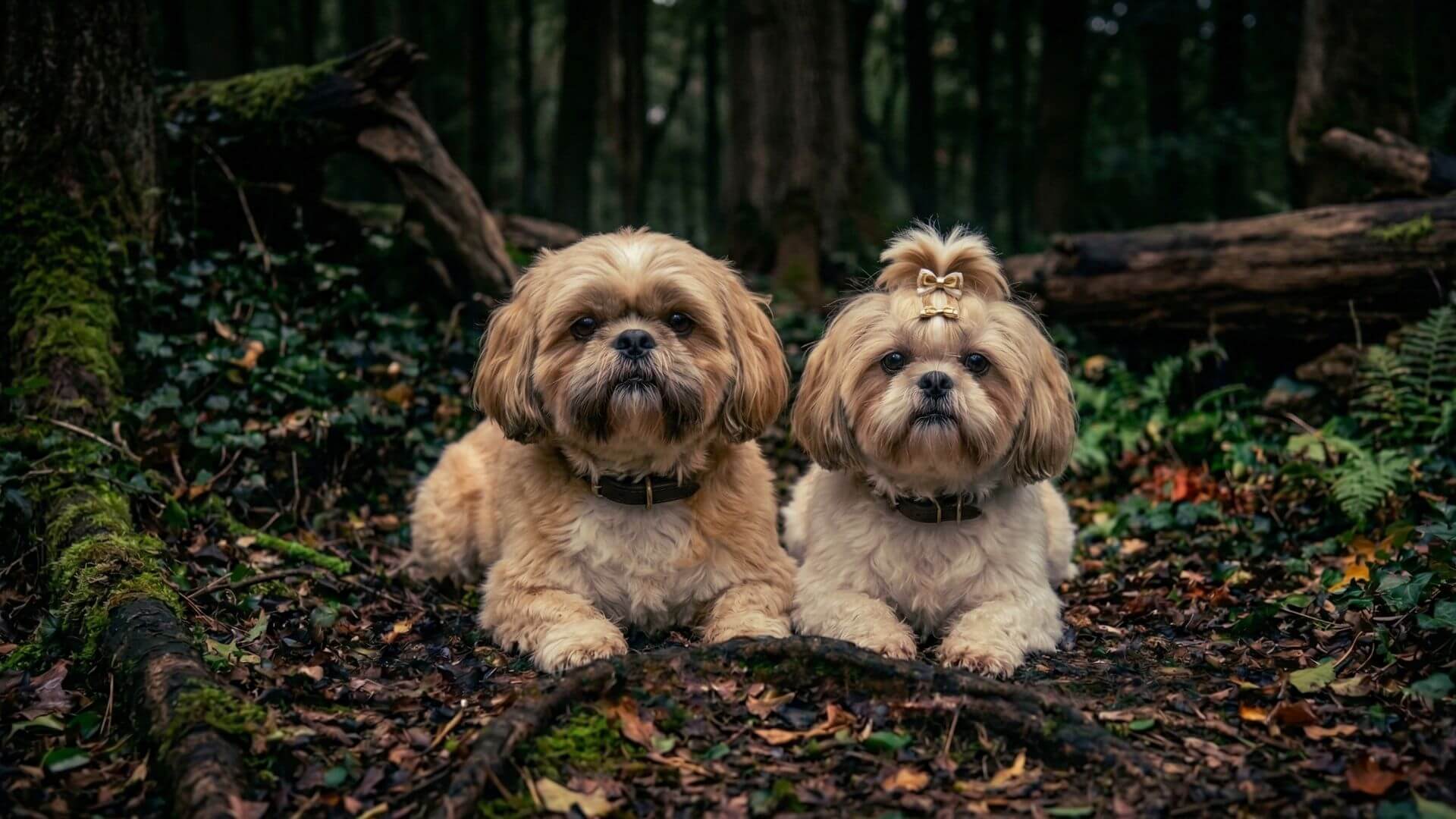
Shih Tzu Stud Dogs for Breeding
Browse verified Shih Tzu stud dogs with health testing, eye certifications, and hip evaluations. Connect with responsible breeders near you.
In This Guide
Featured Shih Tzu Studs
Health-tested and verified breeders ready to connect
Message stud owners directly. No middleman.
What Health Tests Should a Shih Tzu Stud Have?
A Shih Tzu stud should have annual eye exams by a board-certified veterinary ophthalmologist, OFA or PennHIP hip evaluations, patellar (knee) assessments, and DNA testing per American Shih Tzu Club and CHIC program recommendations.
Eye health is the top priority for Shih Tzus. The breed is prone to keratitis sicca (dry eye), progressive retinal atrophy (PRA), and hereditary cataracts. Eye exams must be performed by a veterinarian board-certified by the American College of Veterinary Ophthalmologists (ACVO), and results should be registered with the OFA. Eye certifications expire after 12 months, so verify the exam date is current. Annual exams are required throughout the stud’s breeding years.
Hip dysplasia occurs in Shih Tzus at lower rates than in larger breeds, but screening is still important. OFA hip evaluations should be rated Good or Excellent. PennHIP scores are also accepted, with a distraction index below the breed median considered passing. Most Shih Tzus have normal hips, but dysplasia can still appear in otherwise sound breeding lines.
Patellar luxation (knee dislocation) is common in toy breeds, including Shih Tzus. OFA patellar evaluations assess the stability of the kneecap. Grade I or II is acceptable for breeding; Grade III or IV should exclude a dog from breeding.
DNA testing for Shih Tzus should include screening for juvenile cataracts and PRA. The American Shih Tzu Club recommends verification of these genetic conditions before breeding. Some lines carry cataracts or retinal atrophy; testing identifies carriers and affected dogs.
All results should be registered with the OFA database and cross-referenced with breed club recommendations. A complete health profile confirms that responsible screening has been done.
Learn more: Health Testing Before Breeding
Health Tests for Shih Tzu Studs
5 core evaluations for responsible Shih Tzu breeding
How Much Does a Shih Tzu Stud Fee Cost?
Shih Tzu stud fees typically range from $800 to $3,000, depending on health test status, bloodline, champion titles, and breeding history.
Companion-quality studs with basic health clearances sit at $800 to $1,500. Studs with full health testing, OFA Good or Excellent hips, current eye exams, and documented breeding history command $1,500 to $2,200. Champion-titled studs with multiple generations of health clearances and proven litters reach $2,200 to $3,000. Some stud owners offer pick-of-litter agreements as an alternative to cash payment.
Always ask what’s included in the fee: does it cover one or two breeding attempts, pregnancy monitoring, or a return breeding if conception fails?
Total breeding costs for Shih Tzus are higher than for larger breeds due to artificial insemination frequency and higher veterinary care. Budget $100 to $200 for progesterone testing to time ovulation, $400 to $800 for artificial insemination (AI is common for this breed due to size constraints), $300 to $600 for whelping supplies, and $1,000 to $2,500 for puppy care through 8 weeks.
Shih Tzus are brachycephalic (flat-faced) and have high rates of cesarean section delivery. Many studs cannot breed naturally due to size and airway anatomy. Budget $1,500 to $3,500 for a planned cesarean section if the dam cannot deliver naturally, which is common. Surgical recovery and post-op care add significant cost.
Small litters are typical for Shih Tzus, usually 1 to 4 puppies per litter. This reduces puppy-rearing costs but also means fewer puppies to sell, so plan breeding margins accordingly.
Get everything in writing. A stud contract should cover breeding method, number of attempts, pregnancy monitoring, responsibility for veterinary costs if complications arise, and what happens if conception fails.
Learn more: Stud Services for Dogs
Stud Fee Ranges
Typical pricing based on titles and health testing
Total Breeding Budget
Stud fee to 8-week puppies (accounting for Cesarean delivery)
Ready to find the right stud? Browse Shih Tzu studs and connect with owners directly.
Browse Shih Tzu StudsDo Shih Tzus Need Artificial Insemination?
Yes, most Shih Tzus require artificial insemination or vaginal/surgical AI due to their small size and brachycephalic structure. Natural mating is possible but uncommon in responsible breeding because of anatomical challenges and injury risk.
The small frame of Shih Tzus, combined with flat-faced anatomy, creates obstacles to natural breeding. Size disparity between stud and dam, plus respiratory constraints, makes AI the safer and more reliable breeding method. Many stud owners and breeders use AI exclusively to protect both the stud and dam.
Chilled semen shipped overnight is the most common approach. Chilled semen is inseminated within 24 to 48 hours and achieves 60 to 75% conception rates. This method is cost-effective and practical for long-distance pairings. Frozen semen offers longer-term flexibility but requires transcervical insemination (TCI) or surgical implantation, with success rates of 75 to 85% when timing is managed with progesterone testing.
Progesterone testing is essential for timing ovulation correctly, especially with AI. Shih Tzu heat cycles can be irregular, and precise timing improves success. Budget $100 to $200 for progesterone testing.
Discuss AI options with both the stud owner and your reproductive veterinarian before committing. Not all vets are experienced with Shih Tzu AI, so verify your vet’s expertise in small-breed reproduction. Contact other breeders who use the same vet to confirm experience with toy-breed reproduction.
Learn more: Breeding Guide, Health Testing Resources
Brachycephalic Breeding Considerations for Shih Tzus
Shih Tzus are brachycephalic, meaning they have a shortened muzzle and flat face. This breed trait has health implications that responsible breeders must address when selecting studs and planning litters.
Brachycephalic obstructive airway syndrome (BOAS) is the primary concern. This condition involves narrowed nostrils, an elongated soft palate, and reduced airway diameter. BOAS ranges in severity from mild (occasional reverse sneezing) to severe (breathing difficulty, exercise intolerance, heat sensitivity). Affected dogs tire easily, struggle in warm weather, and may require surgical correction.
The American Shih Tzu Club emphasises breeding for open nostrils and moderate skull structure to reduce BOAS risk. Studs should have clear nostrils (not pinched), good air passage, and no audible breathing issues. A preliminary BOAS screening by a veterinarian can identify severe cases, though formal endoscopy is the diagnostic standard.
Select studs with minimal exaggeration of facial features. Preference for moderate muzzle length and open nasal passages reduces the likelihood of producing puppies with severe BOAS. Avoid studs marketed for extremely flat faces or rare “baby-faced” types, as these traits correlate with airway obstruction.
Shih Tzus also experience higher rates of eye problems due to brachycephaly, including dry eye (keratitis sicca), ulcers, and entropion (inward-rolling eyelids). Annual eye screening by an ACVO ophthalmologist is critical for breeding studs.
When evaluating a stud, ask about BOAS history, respiratory health, and eye status. Request video or photos showing the stud’s breathing at rest and during activity. If the stud has any breathing difficulty, snoring at rest, or heat sensitivity, it should not be used for breeding.
Breeding for health means selecting studs with balanced features, not extreme exaggeration. Responsible Shih Tzu breeders prioritise dogs that can breathe, see, and move comfortably.
Brachycephalic Health Screening
Reducing BOAS risk in Shih Tzu litters
Shih Tzu Coat Colours and Genetics
Shih Tzus come in a wide variety of colours, and the AKC breed standard accepts nearly all coat colours and patterns. This makes colour genetics flexible compared to more limited-colour breeds.
Common solid colours include white, cream, red, black, and blue (gray dilute). Parti-coloured dogs have white combined with red, black, or liver. Sable and shaded patterns feature darker tips on lighter hair. Brindle adds stripes to the base colour. All colours and combinations are acceptable in the show ring.
Coat colour in Shih Tzus is controlled by multiple genes. The B locus determines black versus brown (liver) pigment. The D locus controls dilution, so dilute genes produce blue or gray from black, and silver or champagne from liver. The E locus affects colour expression. Understanding these loci helps predict colour outcomes in litters.
Unlike some breeds, no Shih Tzu coat colour carries inherent health risk from the colour itself. Dilute colours (blue, silver) are not linked to health problems as they are in other breeds. This means colour pairing decisions are primarily aesthetic.
For breeders planning litter colours, consider the dam’s and stud’s colour genetics. If you want to produce red puppies, pair a red dam with a red or cream stud. If you want parti-coloured puppies, at least one parent should carry the parti gene. White and cream puppies often appear lighter than expected due to coat development and maturation.
Coat colour can change significantly as puppies grow. A black puppy might show brown undertones or lightening. A cream puppy may deepen. Consult your stud owner about how their dogs’ coats matured to set realistic expectations for buyers.
Learn more: DNA Testing Before Breeding, Stud Dog Directory
Shih Tzu Coat Colours
All AKC recognised — no colour restrictions
Patterns
- Parti-Coloured: White with red, black, or liver spots
- Sable: Darker tips on lighter hair, shaded appearance
- Brindle: Stripes of darker colour on lighter base
- All patterns recognised by AKC
How to Choose the Right Shih Tzu Stud
Use PairMyPet to browse stud profiles by breed and location, then message owners directly to discuss health clearances, pedigree, and breeding terms.
Check the stud’s structure and type. Review the AKC breed standard and assess the stud’s balance: correct head type, moderate muzzle, well-set eyes, balanced body proportions. Avoid studs with extreme exaggeration of facial features.
Evaluate brachycephalic health. The stud should have clear, open nostrils, no audible breathing issues at rest, good exercise tolerance, and a history of healthy offspring with no BOAS complaints. Ask for video or recent photos showing the stud’s breathing during normal activity.
Stud Evaluation Checklist
Essential criteria when selecting a Shih Tzu stud
Temperament & Pedigree Evaluation
Critical factors in responsible stud selection
Temperament
- Affectionate and social
- Confident without shyness
- Playful but not hyperactive
- Easy to handle
Pedigree
- Five-generation pedigree available
- No BOAS history in lines
- No eye disease pattern
- No kidney problems
Evaluate temperament. Shih Tzus should be affectionate, confident, and playful without being hyperactive or shy. Look for social, friendly, and outgoing dogs. A good stud will be easy to handle and pass these traits to offspring.
Review the stud’s pedigree. Ask for a five-generation pedigree and note any health issues or reproductive problems in the lines. A pedigree free of BOAS, eye disease, or kidney problems is preferable.
Look at breeding history. Has the stud produced healthy litters with good temperament? Are previous dam owners willing to give references? A proven stud with documented offspring and happy puppy buyers gives you more confidence than an unproven dog.
What to Look For (and What to Avoid)
Green Flags
- Current eye exam and OFA results shared upfront
- Clear nasal passages, no breathing issues documented
- Offers stud contract with pregnancy support
- References from previous dam owners available
- Video or recent photos showing stud’s breathing and movement
Red Flags
- No eye exam or outdated (over 12 months)
- Breathing difficulties, snoring at rest, or heat sensitivity
- No written stud contract
- No health testing documentation
- Pressures quick decisions or non-refundable deposits
Know what to look for? Browse studs that meet your criteria.
Find Your Shih Tzu StudHow to Find a Shih Tzu Stud on PairMyPet
Finding a verified Shih Tzu stud takes four steps on PairMyPet. No cold-calling breeders, no scrolling Facebook groups for hours.
Create Your Dam’s Profile
Sign up and add your dam’s photo, breed, age, and a short description. This takes about 5 minutes. Your profile becomes searchable too, so stud owners can find you and reach out directly.
Browse Stud Profiles
Browse stud profiles by breed and location. Review photos and descriptions to shortlist studs that match your breeding goals.
Compare Profiles
Compare stud profiles side by side. Look at photos, descriptions, and owner details before reaching out.
Message Stud Owners
Contact stud owners through PairMyPet’s messaging system. Ask about health clearances, breeding terms, and stud contracts. Most owners respond within 24 hours.
Frequently Asked Questions
What health tests should a Shih Tzu stud have?
A Shih Tzu stud should have an annual eye exam by an ACVO ophthalmologist, OFA or PennHIP hip evaluation rated Good or Excellent, patellar assessment Grade I or II, and DNA tests for PRA and juvenile cataracts. The American Shih Tzu Club and CHIC program define these as breed standards. Verify results directly on the OFA database. Eye exams must be current (within 12 months).
How much is a Shih Tzu stud fee?
Stud fees range from $800 to $3,000 depending on health testing status, titles, and breeding history. Companion-quality studs cost $800 to $1,500. Health-tested studs with full documentation reach $1,500 to $2,200. Champion-titled studs with proven litters reach $2,200 to $3,000. Ask what’s included: breeding attempts, pregnancy support, and return breeding policy if conception fails.
Why do Shih Tzus need artificial insemination?
Shih Tzus are small and brachycephalic (flat-faced), which creates anatomical challenges for natural mating. Most responsible breeders use AI to protect both the stud and dam from injury. AI also allows for geographic flexibility, long-distance pairings, and precise ovulation timing with progesterone testing.
What is BOAS in Shih Tzus?
Brachycephalic obstructive airway syndrome (BOAS) is a condition caused by a shortened muzzle, narrowed nostrils, and elongated soft palate. Affected dogs may struggle to breathe, especially during exercise or in heat. Responsible breeders select studs with open nostrils, clear airways, and no breathing difficulties to reduce BOAS risk in puppies.
How do I know if a Shih Tzu stud has BOAS?
A stud with BOAS will show signs like audible breathing or snoring at rest, excessive panting with mild activity, heat sensitivity, and reduced exercise tolerance. Video or in-person evaluation helps assess breathing. Ask about offspring and whether any previous puppies developed respiratory issues. Avoid studs with visible breathing problems or extreme facial exaggeration.
What coat colours can Shih Tzus be?
Shih Tzus come in nearly all colours and patterns recognised by the AKC breed standard, including white, cream, red, black, liver, blue (gray dilute), silver (champagne), and patterns like parti-coloured, sable, and brindle. No colour is genetically superior, and all are acceptable for breeding and showing.
How do I predict coat colour in Shih Tzu puppies?
Coat colour depends on both parents’ genetics. Solid colours breed true more consistently than patterns. Two white parents will produce white puppies. Two reds will produce red puppies. If you want parti-coloured puppies, at least one parent should carry the parti gene. Ask the stud owner about their dogs’ colour genetics and expected outcomes.
What should a stud contract include?
A stud contract should cover the stud fee, breeding method (natural or AI), number of breeding attempts, pregnancy monitoring and support, responsibility for veterinary costs, return breeding policy if conception fails, and carrier status for known genetic conditions. Get everything in writing to protect both parties.
Find Your Perfect Shih Tzu Stud
Finding the right stud takes research, but it sets up your litter for health, temperament, and longevity. Use PairMyPet to connect with verified breeders who’ve already invested in health testing, BOAS screening, and thoughtful breeding planning. Learn more about responsible breeding practices before you start your search.
Get Started