
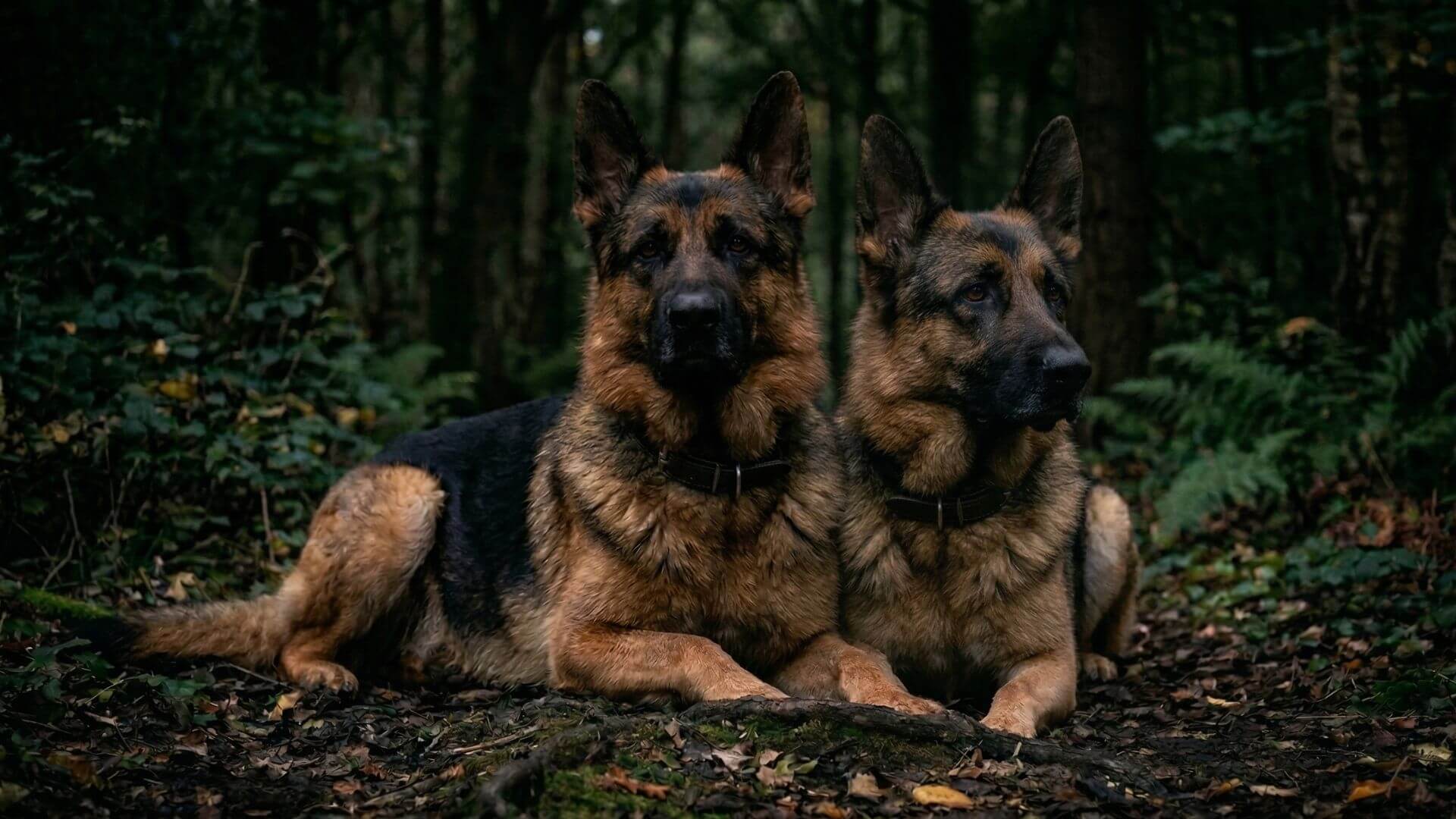
German Shepherd Stud Dogs for Breeding
Browse verified German Shepherd stud dogs with OFA hip and elbow certifications, DM testing, and working titles. Connect with responsible breeders near you.
In This Guide
Featured German Shepherd Studs
Health-tested and verified breeders ready to connect
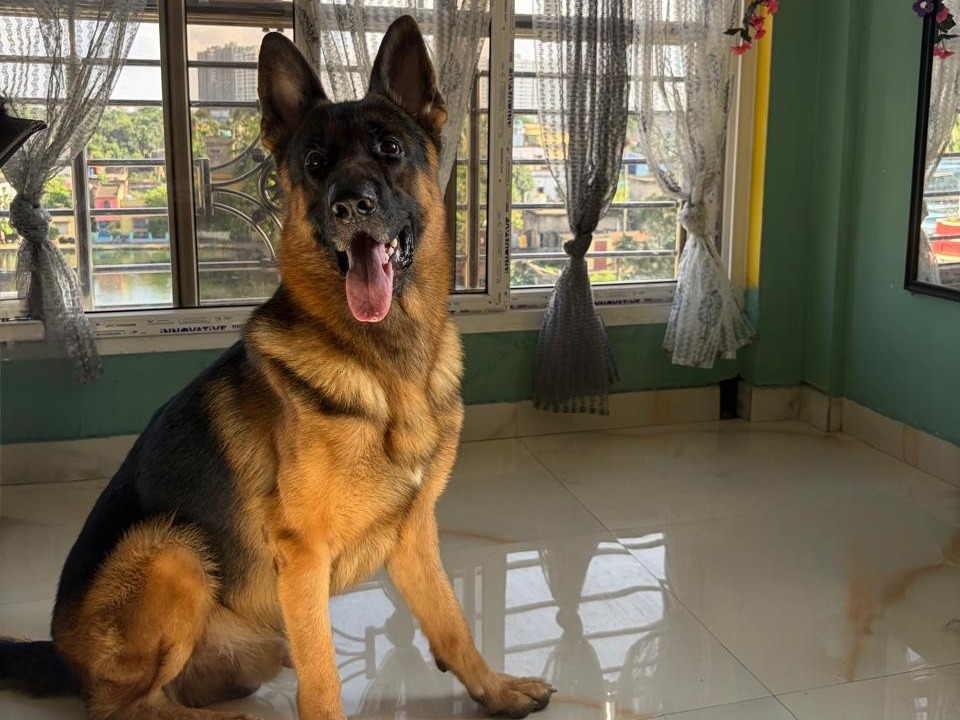



Message stud owners directly. No middleman.
What Health Tests Should a German Shepherd Stud Have?
A German Shepherd stud should have OFA hip and elbow evaluations, a DM (degenerative myelopathy) DNA test, cardiac screening, thyroid panel, and a current ophthalmologist eye exam per German Shepherd Dog Club of America standards.
Hip dysplasia is the single biggest health concern in this breed. OFA rates hips as Excellent, Good, or Fair for passing scores. Anything rated Borderline, Mild, Moderate, or Severe is a fail. A stud with OFA Good or Excellent hips is the baseline you should expect. Elbow evaluations follow the same principle: only Normal passes. Any grade of dysplasia disqualifies a responsible breeding candidate.
The DM DNA test screens for the SOD1 gene mutation linked to degenerative myelopathy, a progressive spinal cord disease. Results fall into three categories: Clear (N/N), Carrier (N/DM), or At-Risk (DM/DM). The GSDCA recommends testing all breeding stock and factoring DM status into pairing decisions, though it should be weighed alongside hips, elbows, temperament, and overall structure.
Cardiac evaluation by a board-certified cardiologist and a thyroid panel round out the CHIC requirements for German Shepherds. Eye exams (CERF) should be current within 12 months and registered with OFA.
When reviewing stud profiles, ask for copies of all test results. Reputable owners post them publicly or share them during conversations. Verified health documentation is a confidence signal that the breeder takes their program seriously.
Learn more: Health Testing Before Breeding
Required Health Tests
5 essential screenings for responsible GSD breeding
Understanding DM DNA Test Results
- No copies of mutated gene
- Cannot pass DM gene to puppies
- Ideal breeding candidate
- One copy of mutated gene
- Will not develop DM
- 50% chance of passing gene
- Breed to Clear partners only
- Two copies of mutated gene
- Higher risk of developing DM
- All offspring inherit one copy
- Pair with Clear only
How Much Does a German Shepherd Stud Fee Cost?
German Shepherd stud fees typically range from $1,000 to $5,000 or more, depending on OFA scores, titles, bloodline quality, and whether the stud is working line or show line.
Companion-quality studs with basic health clearances sit at $1,000 to $2,000. Studs with OFA Excellent hips, full CHIC certifications, and a proven track record of healthy litters command $2,000 to $3,500. Champion-titled studs or dogs with IPO/IGP working titles, Schutzhund certifications, and imported European bloodlines reach $3,500 to $5,000 or higher.
Always ask what’s included in the fee: does it cover one or two breeding attempts, a live litter guarantee, or a return breeding if the litter is small?
Total breeding costs go beyond stud fees. Budget $100 to $200 for progesterone testing to time the breeding correctly, $200 to $500 for artificial insemination if using shipped semen, and $500 to $1,500 for whelping supplies and puppy care through 8 weeks. Emergency veterinary care during whelping is an additional variable cost.
Unlike French Bulldogs, German Shepherds typically deliver naturally without requiring a cesarean section. This removes one of the largest expenses in brachycephalic breeding. However, large litters (8 to 12 puppies are common) mean higher food and veterinary costs during the nursing period.
Get everything in writing. A stud contract should cover live litter guarantees, liability, health testing proof, and what happens if the breeding doesn’t take.
Learn more: Stud Services for Dogs
Stud Fee Ranges
Typical pricing based on titles and certifications
Total Breeding Budget
Stud fee to 8-week puppies
Ready to find the right stud? Browse German Shepherd studs and connect with owners directly.
Browse German Shepherd StudsDo German Shepherds Need Artificial Insemination?
No, German Shepherds are structurally built for natural breeding and most pairings happen without AI. Their athletic frame, balanced proportions, and strong hind legs mean natural mating is the standard approach for this breed.
AI becomes relevant in two situations. First, when the dam and stud are in different regions and the stud owner ships chilled or frozen semen. Second, when a reproductive veterinarian recommends it based on the dam’s anatomy or previous breeding difficulty.
Chilled semen ships overnight and is inseminated within 24 to 48 hours. Frozen semen requires transcervical insemination (TCI) or surgical implantation for the best conception rates. Both methods require progesterone testing ($100 to $200) to pinpoint ovulation timing.
If you’re breeding locally, natural breeding with veterinary supervision is the simplest path. For long-distance pairings, AI opens up access to studs you couldn’t reach otherwise, including top-titled dogs in other regions or imported European lines.
Discuss breeding method options with both the stud owner and your reproductive vet before committing.
Learn more: Breeding Guide
Working Line vs Show Line: Which Stud Is Right for You?
This is the most important decision when selecting a German Shepherd stud, and it’s one that doesn’t exist for most other breeds. Working lines and show lines have been bred for different purposes over decades, and the distinction affects structure, temperament, drive, and health outcomes.
Show line German Shepherds (West German Show Lines or American Show Lines) are bred for conformation and appearance. They tend to have a more angulated rear, sloped topline, and heavier bone. Temperament leans calm and sociable. These dogs do well in homes looking for a family companion with breed-standard looks.
Working line German Shepherds (West German Working Lines, DDR/East German Lines, Czech Lines) are bred for function: protection, tracking, search and rescue, and sport. They have a straighter back, more compact build, and higher drive. Temperament is intense, focused, and requires experienced handling.
Working Line vs Show Line German Shepherds
Working Line
- Straighter back, compact build
- Higher drive and energy
- Bred for IPO/IGP, SchH, SAR
- Common colours: sable, solid black, bi-colour
- Needs experienced handler
- Generally healthier hips (straighter structure)
Show Line
- Angulated rear, sloped topline
- Moderate energy, calmer temperament
- Bred for conformation and companionship
- Common colours: black & tan (saddle pattern)
- Suitable for families
- Higher rates of hip/elbow dysplasia (angulated structure)
Your breeding goals determine which line to choose. If your dam is a working line dog and your buyers want sport or protection puppies, pair with a working line stud with IPO/IGP titles and proven nerve. If your dam is show line and your buyers want family pets or conformation prospects, match with a show line stud who complements her structure.
Mixing working and show lines produces variable results. Some breeders do it intentionally to balance drive with trainability, but it’s a more advanced pairing decision. Know your market and your goals before choosing.
German Shepherd Coat Colours and Genetics
Standard AKC colours include black and tan (saddleback pattern), sable, solid black, and bi-colour. These are all accepted in the conformation ring and represent the vast majority of German Shepherds in breeding programs.
Black and tan is the most recognisable pattern, with the classic saddle marking across the back. Sable coats show banded hair shafts where each strand contains multiple colours, common in working lines. Solid black is recessive and requires two copies of the ‘a’ gene. Bi-colour dogs are mostly black with tan restricted to the legs and face.
White German Shepherds carry the ‘e/e’ genotype that masks all other colour expression. The AKC disqualifies white from conformation, though the United Kennel Club recognises the White Shepherd as a separate breed. Blue and liver are dilute colours caused by the ‘d’ gene and ‘b’ gene respectively. Both are considered serious faults under the AKC standard.
DNA colour testing helps predict puppy outcomes when pairing two dogs. If you’re breeding for standard colours and want to avoid producing faulted colours, knowing the genotype of both the sire and dam prevents surprises.
Learn more: DNA Testing Before Breeding, Stud Dog Directory
German Shepherd Colour Genetics
AKC standard vs faulted colours
Recognized Colours
Ay + at (saddle)
Aw (banded)
a/a (recessive)
at/at
Faulted Colours
e/e
AKC Disqualification
d/d
Serious Fault
b/b
Serious Fault
KIT gene mutation
How to Choose the Right German Shepherd Stud
Start with hips and elbows. OFA ratings of Good or Excellent are the minimum. Check results directly on the OFA database rather than relying on claims alone. Then verify DM status, cardiac clearance, and thyroid results.
Next, evaluate temperament. A stud should be confident, stable under pressure, and approachable without being aggressive or overly soft. If the stud has working titles (IPO/IGP, SchH), those confirm nerve strength and trainability under stress. For show line studs, conformation titles (V or VA rated at SV shows, or AKC champion) confirm breed-standard structure.
Review the stud’s pedigree and calculate the coefficient of inbreeding (COI). Aim for COI below 5% to maintain genetic diversity and reduce the risk of inherited conditions. Ask the stud owner for a five-generation pedigree.
Look at breeding history. Has the stud produced healthy litters? Are previous dam owners willing to give references? A proven stud with documented offspring gives you more confidence than an unproven dog, no matter how good he looks on paper.
If possible, meet the stud in person or request video showing his movement, temperament, and structure. Watch how he interacts with people and other dogs.
Use PairMyPet to browse stud profiles by breed and location, then message owners directly to discuss health clearances, pedigree, and breeding terms.
Stud Evaluation Checklist
Essential criteria when selecting a German Shepherd stud
What to Look For (and What to Avoid)
Green Flags
- Shares full OFA results and DM status upfront
- Offers stud contract with live litter guarantee
- Transparent about pedigree, COI, and line type
- Provides references from previous dam owners
- Allows video calls or in-person visits
Red Flags
- Refuses to share health test results
- No written stud contract
- Claims “champion bloodline” without verifiable titles
- No breeding history or references available
- Pressures quick decisions or non-refundable deposits
Know what to look for? Browse studs that meet your criteria.
Find Your German Shepherd StudHow to Find a German Shepherd Stud on PairMyPet
Finding a verified German Shepherd stud takes four steps on PairMyPet. No cold-calling breeders, no scrolling Facebook groups for hours.
Create Your Dam’s Profile
Sign up and add your dam’s photo, breed, age, and a short description. This takes about 5 minutes. Your profile becomes searchable too, so stud owners can find you and reach out directly.
Browse by Breed and Location
Browse stud profiles by breed and location. Review photos and descriptions to shortlist studs that match your breeding goals.
Compare Profiles
Compare stud profiles side by side. Look at photos, descriptions, and owner details before reaching out.
Message Stud Owners
Contact stud owners through PairMyPet’s messaging system. Ask about health clearances, OFA scores, breeding terms, and stud contracts. Most owners respond within 24 hours.
Frequently Asked Questions
What health tests should a German Shepherd stud have?
A German Shepherd stud should have OFA hip and elbow evaluations (Good or Excellent rating), a DM (degenerative myelopathy) DNA test, cardiac evaluation by a board-certified cardiologist, and a thyroid panel. Check OFA’s database directly to verify test dates and results.
How much is a German Shepherd stud fee?
Stud fees range from $1,000 to $5,000+ depending on OFA scores, titles, bloodline, and line type. Companion-quality studs cost $1,000 to $2,000. Champion-titled or IPO/IGP-certified studs with imported European bloodlines reach $3,500 to $5,000. Always ask what’s included (breeding attempts, live litter guarantee, return breeding).
What is DM testing in German Shepherds?
DM (degenerative myelopathy) is a progressive spinal cord disease caused by a mutation in the SOD1 gene. A DNA test classifies dogs as Clear (N/N), Carrier (N/DM), or At-Risk (DM/DM). The GSDCA recommends testing all breeding stock and factoring results into pairing decisions alongside hips, elbows, and temperament.
How do I find a German Shepherd stud near me?
Use PairMyPet to browse German Shepherd studs by breed and location. Review profiles, then message stud owners directly to ask about health clearances and breeding terms.
What’s the difference between working line and show line German Shepherds?
Working lines are bred for function (protection, sport, search and rescue) with straighter backs, higher drive, and intense focus. Show lines are bred for conformation and companionship with more angulated rears and calmer temperament. Your breeding goals and puppy buyer market should determine which line you pair with. Refer to the AKC breed standard for conformation details.
What should a stud contract include?
A stud contract should cover the stud fee amount, number of breeding attempts included, live litter guarantee terms, return breeding policy if the litter is small, health testing documentation, and liability for veterinary complications. Get everything in writing before the first breeding attempt.
What is a good COI for German Shepherd breeding?
Aim for a coefficient of inbreeding (COI) below 5%. Lower COI means greater genetic diversity, which reduces the risk of inherited diseases like hip dysplasia and DM. Ask the stud owner for a five-generation pedigree and calculate COI before committing.
Can I use frozen semen from a German Shepherd stud?
Yes. Many stud owners offer chilled or frozen semen that ships to your location. Frozen semen requires transcervical insemination (TCI) or surgical implantation for the best conception rates. Discuss shipping logistics, storage fees, and success rates with both the stud owner and your reproductive vet.
Find Your Perfect German Shepherd Stud
Finding the right stud takes research, but it sets up your litter for health, temperament, and genetic diversity. Use PairMyPet to connect with verified breeders who’ve already invested in OFA certifications, DM testing, and thoughtful breeding practices.
Get Started